Jessie Tarbox Beals (1870 – 1942)
Canadian-born American photographer and photojournalist
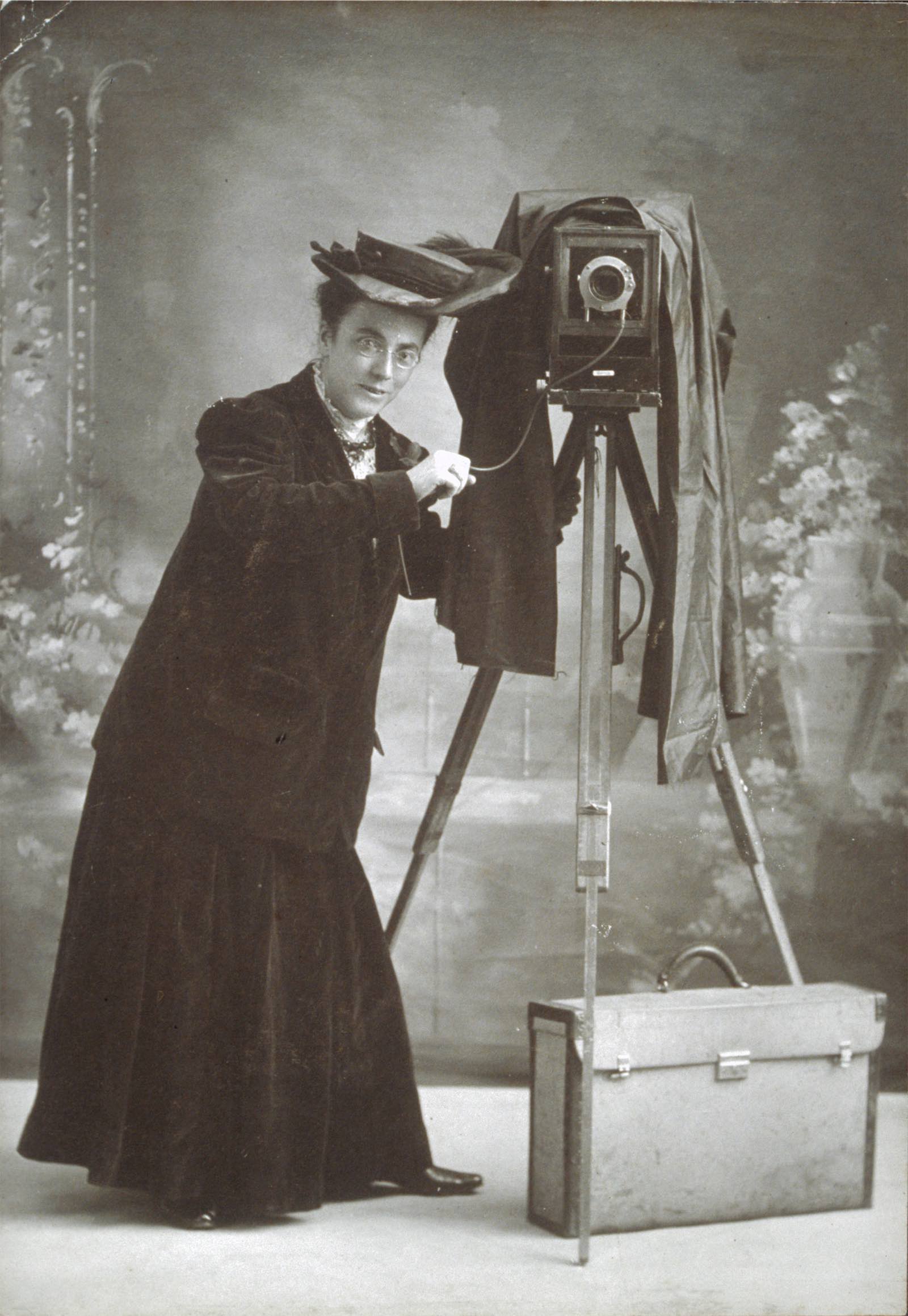
Jessie Tarbox Beals (1870–1942) occupies pioneering perch in the history of photography. She was the first published woman photojournalist in the United States and the first woman known to specialise in night photography. Entirely self-taught, she began her working life as a schoolteacher before pivoting, decisively and daringly, toward the camera.
Her conversion moment came in 1893 after meeting the celebrated pictorialist Gertrude Käsebier, whose example convinced Jessie that photography could be both a profession and a form of independence. By 1899 she had secured her first commission from the Boston Globe, and in 1901 she joined the Buffalo Inquirer, entering the fast, rough world of newspaper photography at a time when women were rarely welcome and never expected to climb ladders with glass plates under their arms.
Jessie made her name as a freelance news photographer, most famously at the 1904 St. Louis World’s Fair, where she became the first woman to be granted press credentials. Refusing to stay grounded, she shot from rooftops, ladders, balconies and even balloons, hauling nearly fifty pounds of 8 x 10 inch equipment and fragile glass negatives. Her images combine spectacle with immediacy, showing not just what happened but how it felt to be there.
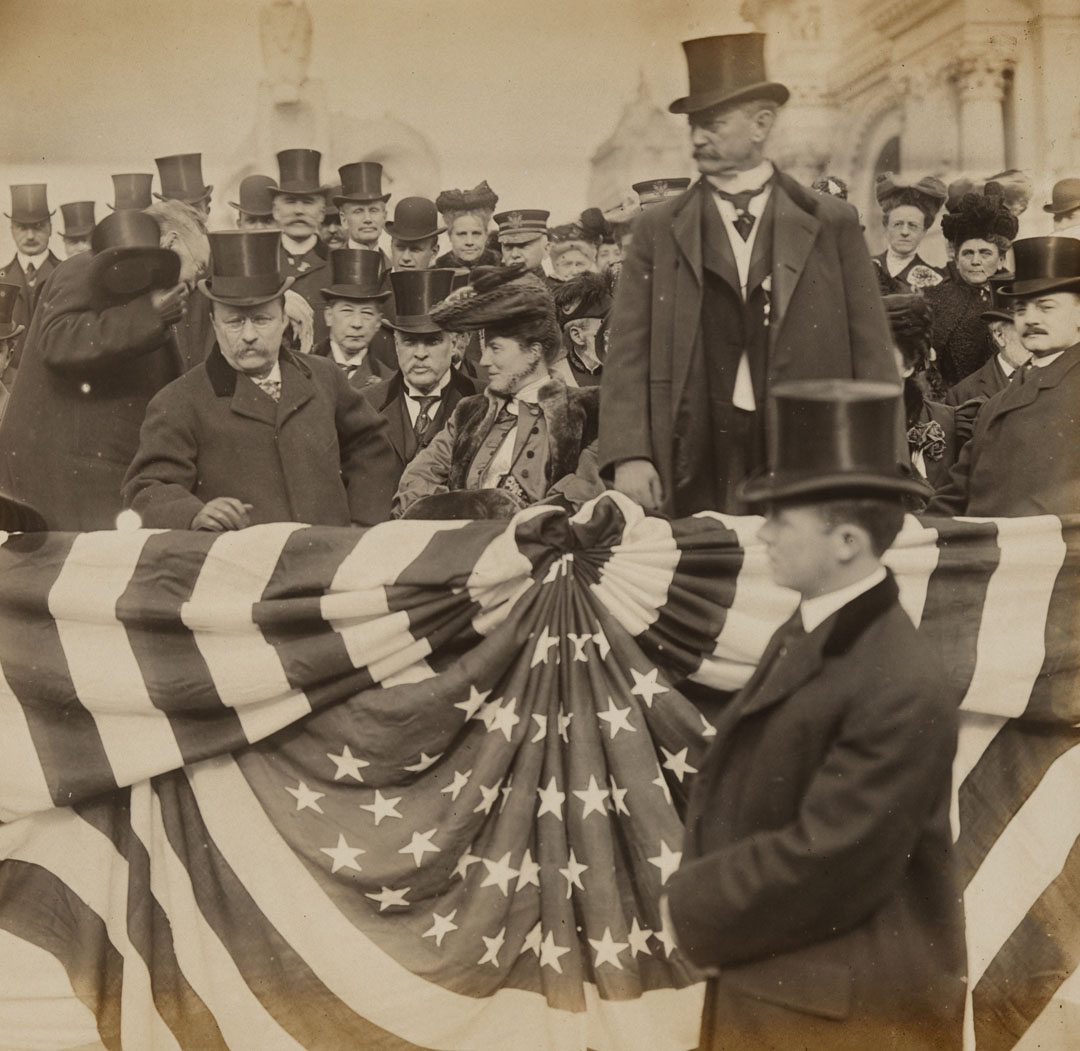
In her photojournalism, Jessie chose her own subjects. She photographed suffrage marches, women at work, street life, and the lived realities of social inequality. She sold her images directly to newspapers, including the New York Times, which in 1913 published one of her most important photo essays documenting the overcrowded and unsafe living conditions of immigrant families. Her 1904 portrait of President Theodore Roosevelt remains one of her most widely recognised images.
-
Image credit: President Theodor Roosevelt, 1904 by Jessie Tarbox Beals courtesy of the National Portrait Gallery, Smithsonian Institution available under a Creative Commons licence; gift of Joanna Sturm
Following the success of the World’s Fair, Jessie opened a studio on Sixth Avenue in New York in 1905. In 1917 she moved to Greenwich Village, then a centre of bohemian and feminist life, where she founded the Village Art Gallery. There she turned her lens inward, photographing the streets, interiors and personalities of women-run cafés, shops and restaurants, quietly building an extraordinary visual record of a female-led creative economy.
Alongside news work, she produced advertising, portraiture and architectural and urban landscapes. Her pictorialist photographs of the Brooklyn Bridge, Madison Square, and city views of Buffalo and Boston show a lyrical sensitivity to light and atmosphere that sits in productive tension with her tougher journalistic eye.
One of the most charming and revealing aspects of her practice is her photography of cats. In Greenwich Village especially, Jessie became known for her affectionate, witty images of cats lounging in shop windows, doorways and domestic interiors. These were not incidental pictures. She carefully staged and captioned them, often anthropomorphising her feline subjects with humour and tenderness. She sold cat photographs as postcards and prints, using them both as a source of income and as a way to reach a broader public. At a time when animal photography was rarely taken seriously, Jessie treated cats as personalities and urban characters, anticipating later traditions of street and animal photography while revealing a softer, playful counterpoint to her fearless news work.
Despite her achievements, her later years were marked by hardship. Like her British contemporary Christina Broom, she produced postcards, including popular series of Girl Scouts and Greenwich Village scenes, to supplement her income. As she aged, she attempted to adapt by using lighter cameras and flexible film, but the Great Depression drastically reduced opportunities for freelance photographers. She struggled to find work and eventually fell into poverty. Jessie Tarbox Beals died in 1942 at the age of seventy-one.
Today, her photographs are held in major public collections, including the Library of Congress and the New-York Historical Society. In 1982, the Schlesinger Library at Radcliffe College received her papers and family photographs from her daughter, Nanette Beals Brainerd. Her reputation was significantly revived by Alexander Alland’s 1978 biography, Jessie Tarbox Beals: First Woman News Photographer, which helped restore her to her rightful place as a pioneer of photojournalism, a chronicler of women’s lives and an unexpectedly delightful photographer of cats.
Check out Danielle Spires’s website for Jessie’s cat pictures.