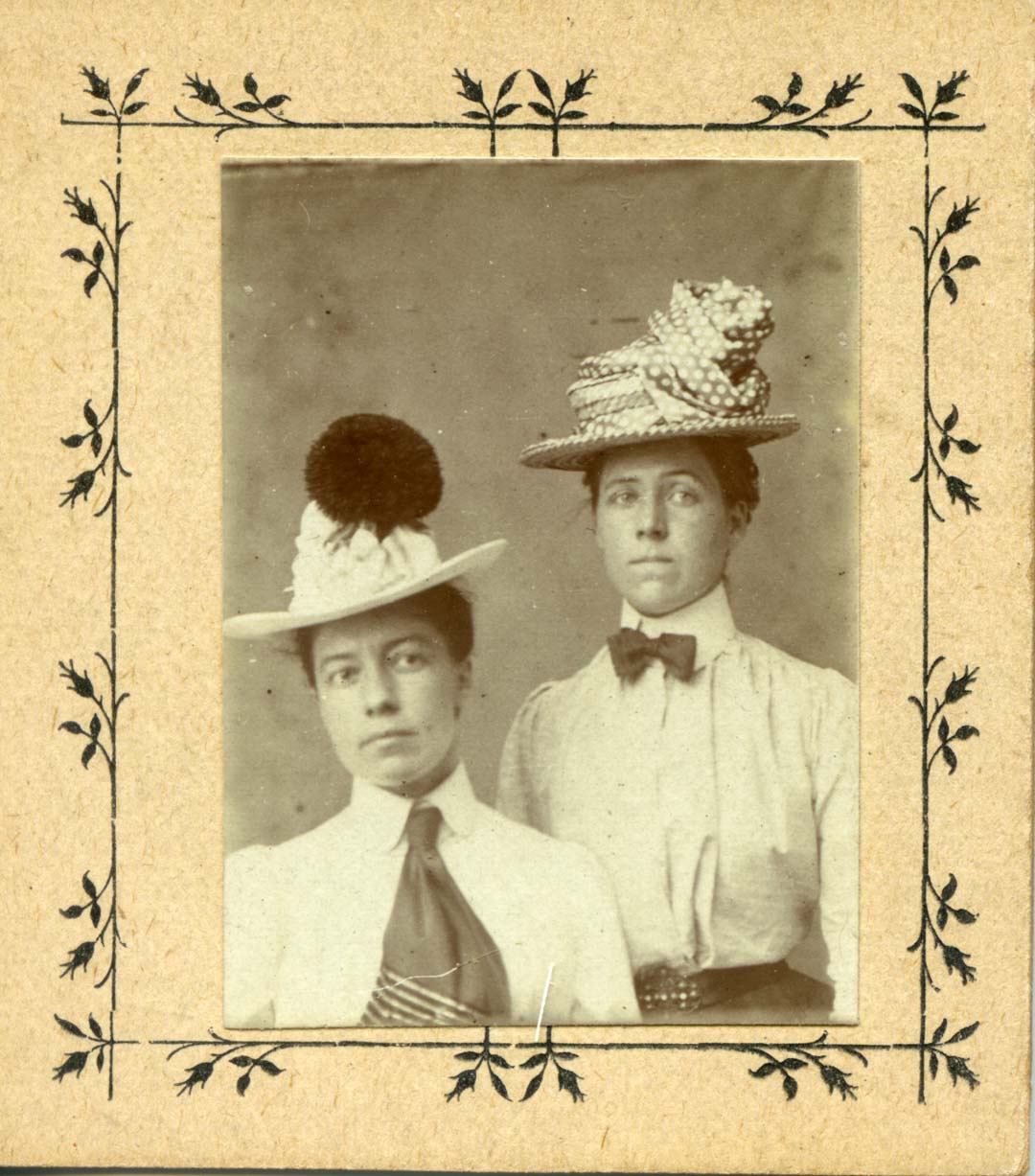
Alice Austen and Gertrude Tate at Pickard’s Penny Photo, c.1901. Courtesy of the Alice Austen House.
Alice Austen in Mortimer Gardens
Part of Nailsworth Pride
📅 19 – 28 June
🎟️ Free
Alice Austen is widely regarded as one of the earliest known women photographers in the United States and one of the most significant LGBTQ+ figures in photographic history.
Her relationship
From around 1899, Austen shared her life with Gertrude Tate. The two women were together for more than 50 years, living and travelling as a couple at a time when same-sex relationships were rarely discussed publicly.
What makes her work queer?
Many of Austen’s photographs playfully challenge Victorian ideas about gender and propriety. She photographed women cross-dressing, smoking, posing as men, and enjoying freedoms that respectable society often frowned upon. While not overtly political statements, these images reveal alternative ways of living and performing identity.
Why does she matter today?
Alice’s photographs provide rare visual evidence of queer lives and relationships at the turn of the twentieth century. She helps demonstrate that LGBTQ+ history has always existed, even when people lacked the language or freedom to describe it openly.
All images courtesy of the Alice Austen House. We are extremely grateful to the Alice Austen House for their help and support with this exhibition.
We would also like to thank Stroud District Council for a Culture Grant and the supporters of this exhibition, who are listed below.
🏳️🌈 THANK YOU! 💕
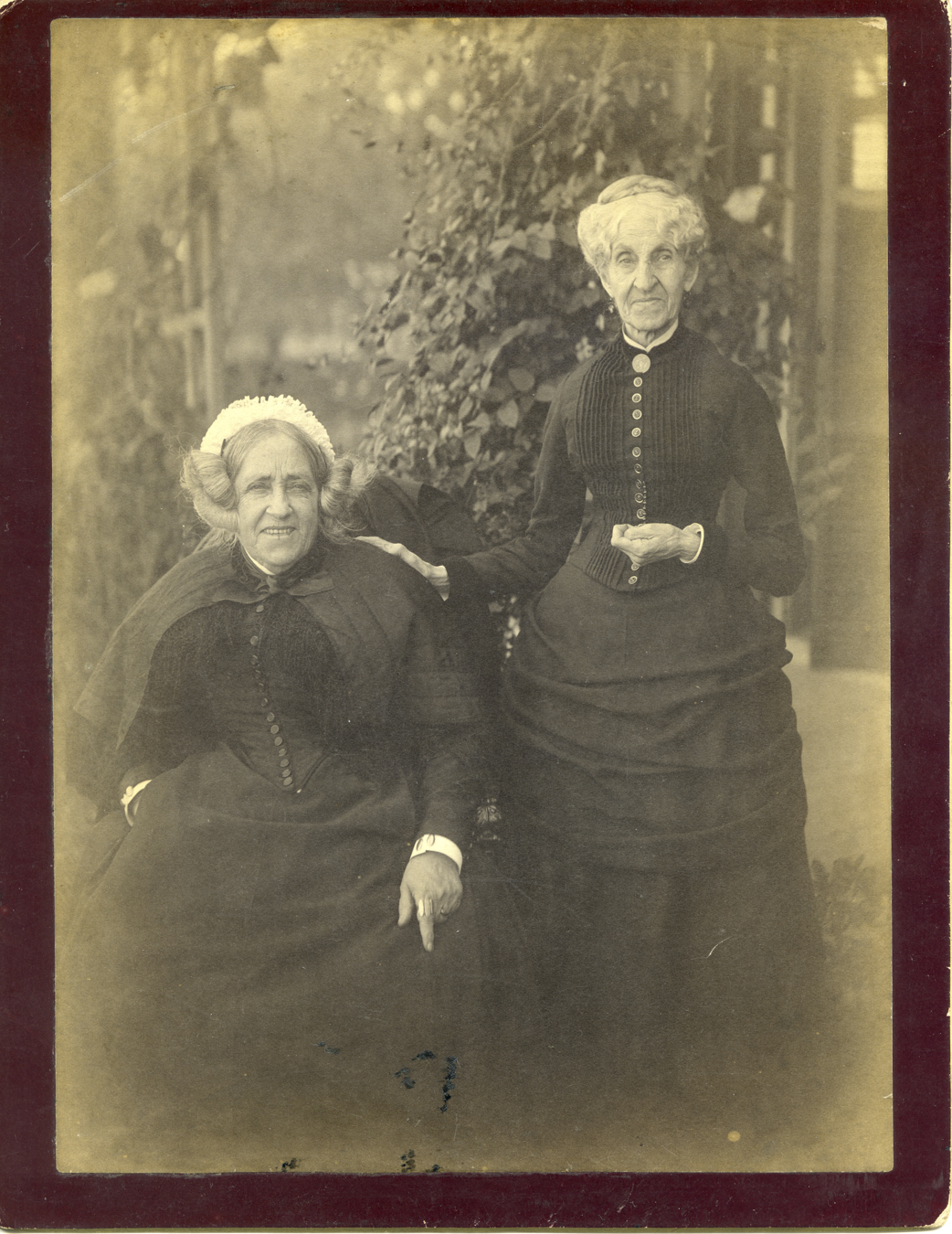
Alice Austen, Elizabeth Alice Townsend Austen and Eliza Anne Binns, c.1885.
Read more
On the left we see Alice’s grandmother Elizabeth Alice Townsend Austen (1813 -1887), mother to Alice Cornell Austen (1837-1900). A Quaker from a prominent New England family, she was the granddaughter of Peter Townsend, whose company fabricated the original chain that stretched across the Hudson in 1778 to prevent British ships from passage. Standing next to her is Eliza Anne Binns – (1865-n/k). Her hand on her shoulder indicates a degree of familiarity. She could have been a companion to Elizabeth’s grandmother, a friend or a senior domestic employee. Wealthy Victorian households often developed very close relationships with senior servants, particularly women who remained with a family for many years. Such relationships could become almost familial, while still occupying an ambiguous social position.
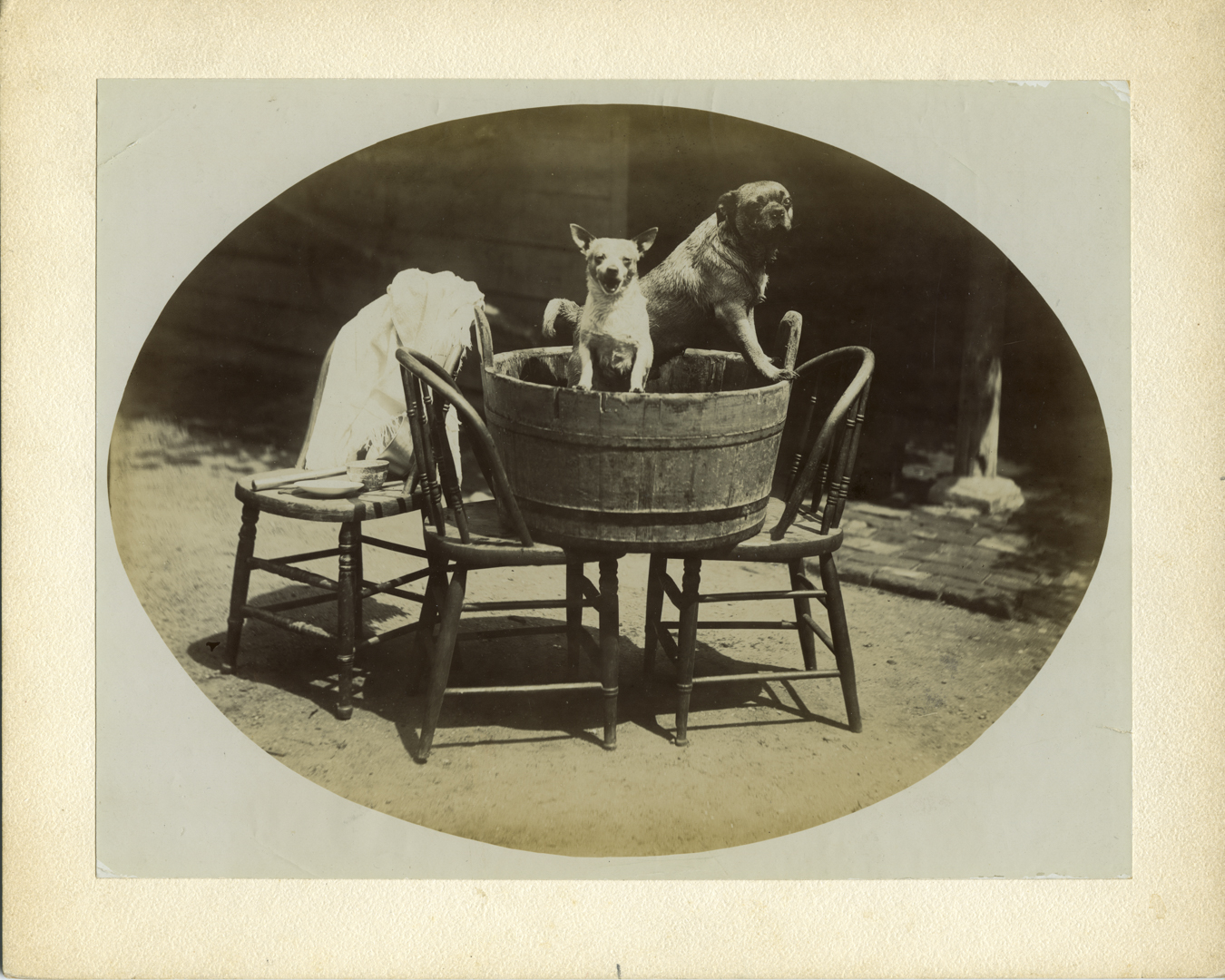
Alice Austen, Dogs in Wash Tub, 1887
Read more
The picture shows two dogs sitting in a wooden wash tub, posed almost as if they were human sitters. Victorian photography often treated animals as family members, and Alice clearly enjoyed the humour of placing her subjects in unexpected situations. The image is remarkably sharp, capturing every detail of the animals’ fur. The brightness of the sun would have helped, reducing the exposure time to a fraction of a second. The photograph also reminds us that Alice experimented constantly, turning everyday people, pets and household objects into photographic subjects. Her albums are full of visual jokes and staged tableaux that feel surprisingly contemporary.
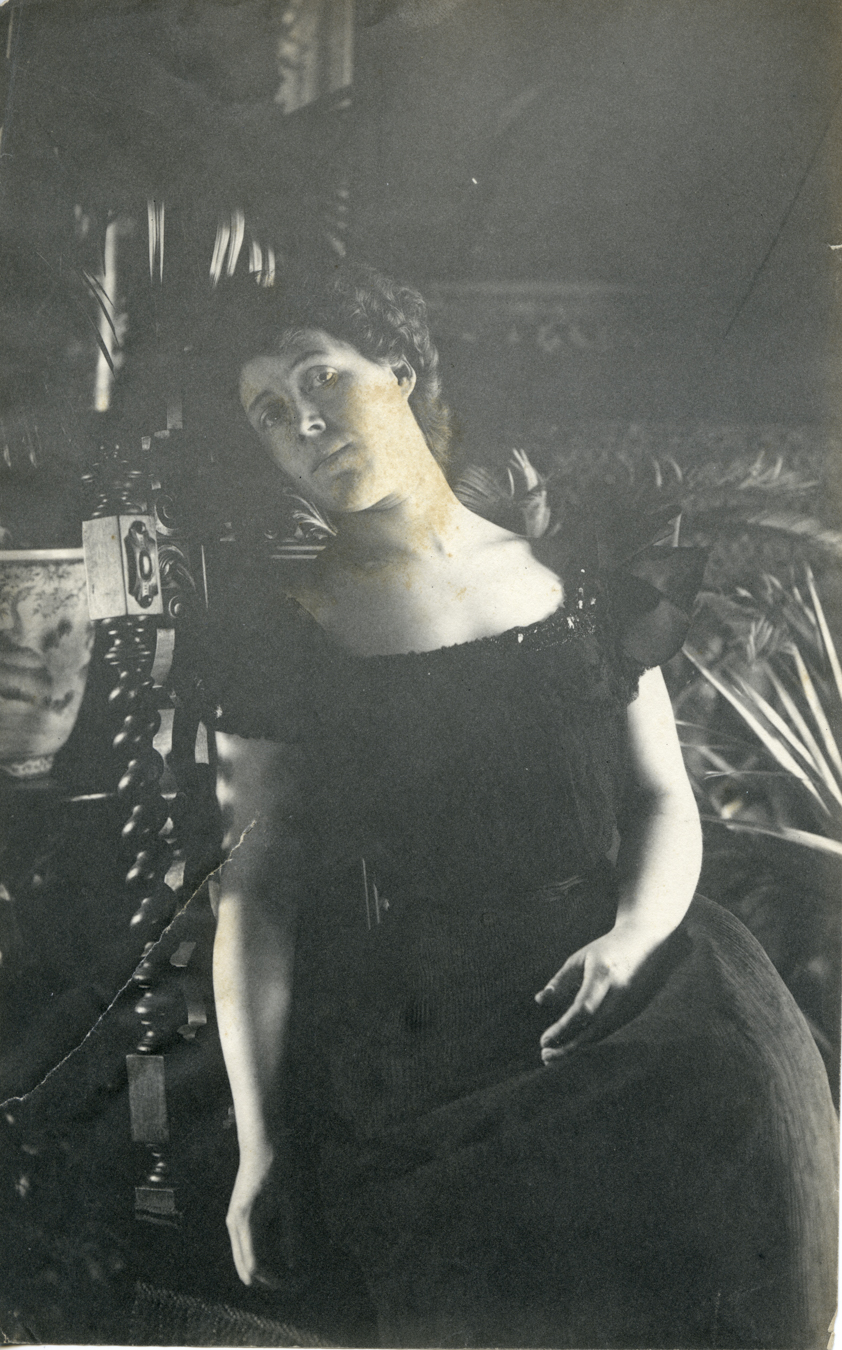
Alice Austen, Gertrude Tate, c. 1900
Read more
In 1899 while on holiday in the Catskill Mountains, Alice met Gertrude Amelia Tate, a 26 year old kindergarten teacher and dance instructor with whom she would go on to have a 53 year relationship. At the time, Gertrude was living in Brooklyn with her mother and sister, recovering from typhoid fever.
Gertrude and Alice began to spend a lot of time together and soon became inseparable. Between 1903 and 1912 they holidayed in Europe together and in 1917 Gertrude moved into Alice’s family home, Clear Comfort where she would live for the next three decades. Alice’s family disapproved of her relationship with Gertrude, fearing it would hinder her chances of finding a suitor. The pair were hit heavily by the Wall Street crash of 1929 and ran a tea house together for a time, but were eventually forced to sell Clear Comfort in 1944. Now both in their 70s, Alice and Gertrude moved to an apartment in St. George, Staten Island where they stayed until Alice’s worsening arthritis meant that Gertrude could no longer care for her.
Gertrude, entrusted with Alice’s remaining possessions, moved to Brooklyn to live with her sister. However, Alice was not welcome and ended up in a hospital ward at New York City Farm Colony, a poor house in Staten Island. Gertrude visited Alice there every week until she died. The couple’s families did not honour their wish to be buried together and Alice and Gertrude ended up in cemeteries in Staten Island and Brooklyn respectively.
Alice Austen, Elizabeth Alice Townsend Austen and Eliza Anne Binns, c.1885.
Read more
The picture shows two dogs sitting in a wooden wash tub, posed almost as if they were human sitters. Victorian photography often treated animals as family members, and Alice clearly enjoyed the humour of placing her subjects in unexpected situations. The image is remarkably sharp, capturing every detail of the animals’ fur. The brightness of the sun would have helped, reducing the exposure time to a fraction of a second. The photograph also reminds us that Alice experimented constantly, turning everyday people, pets and household objects into photographic subjects. Her albums are full of visual jokes and staged tableaux that feel surprisingly contemporary.
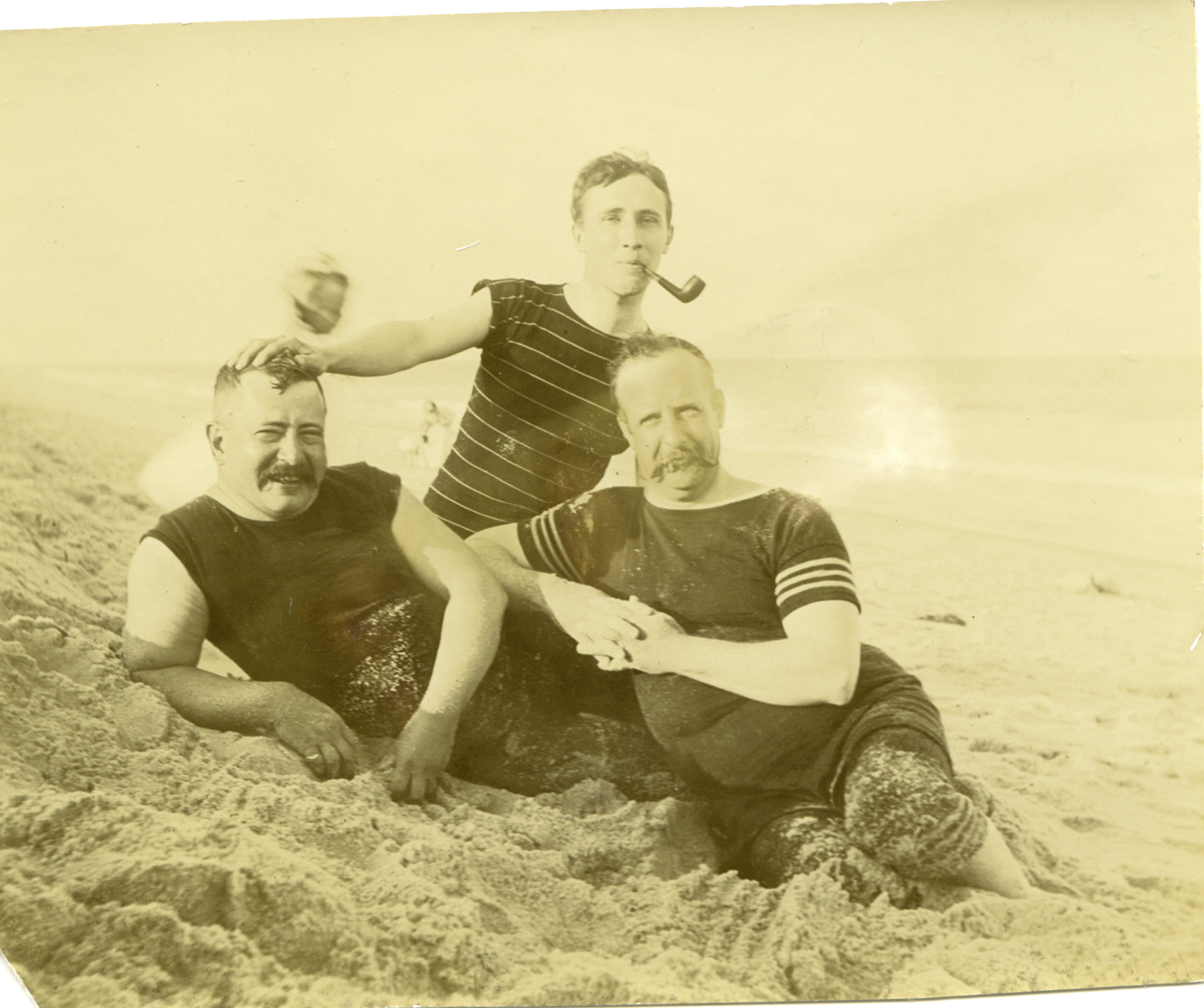
Alice Austen, Mr Montgomery, Uncle, Brother, 1895.
Read more
Alice Austen’s title identifies the sitters through a mixture of names and family relationships. The man on the right is believed to be her uncle, Peter Townsend Austen, but the identities of “Mr Montgomery” and “Brother” remain uncertain, as Alice was an only child.
Like many photographs in her archive, the image preserves a moment that was immediately recognisable to its creator but is only partially legible to us today. The photograph reminds us that archives are never complete.
Richard Meyer, LGBTQ art writer and co-author of Art and Queer Culture compares this composition with Alice’s photo of 3 swan boats in New York’s Central Park to discuss to the pleasures of Alice Austen’s existence, which she referred to as the “Larky Life” (from the Alice Austen House website).
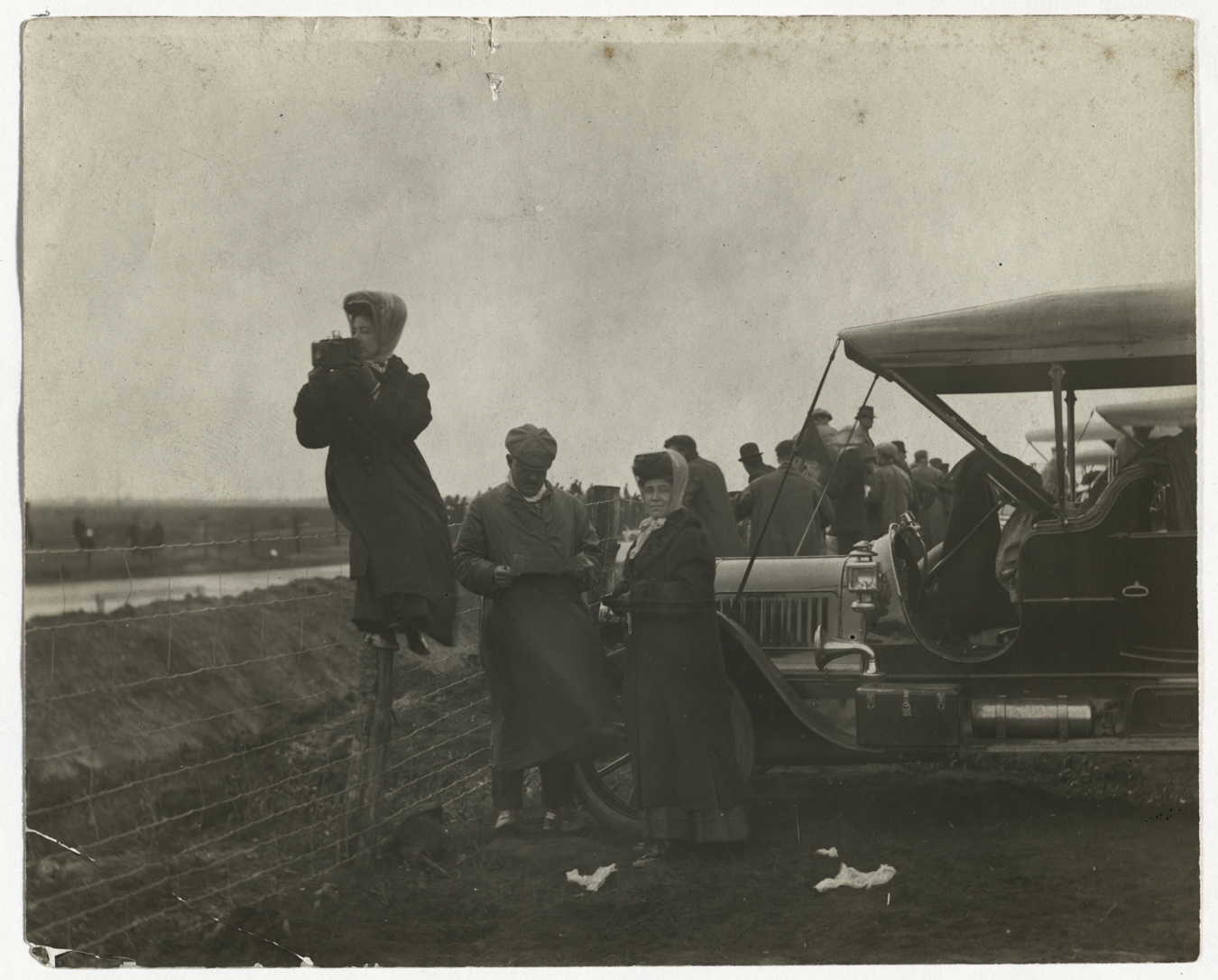
Alice sitting on a Fence with her Camera, 1908
Read more
The image, shows Alice Austen perched precariously on top of a fence with her camera, while her partner Gertrude Tate stands nearby watching. The photograph was taken during an automobile race and captures Alice doing whatever was necessary to get the best viewpoint. Contemporary descriptions emphasise her determination and athleticism.
What is particularly striking is that photography, at the time, was not a lightweight hobby. Alice’s equipment could weigh up to 50 pounds (over 20kg), including camera, tripod, lenses and glass plates. To obtain a clear view of the race, she simply climbed the fence.
For modern audiences, the photograph almost feels symbolic. Here is a woman literally refusing to stay behind the barrier. While many women of her class were expected to observe from the sidelines, Austen was documenting the action, travelling independently, riding bicycles, owning a car and making photographs in places where women were rarely seen with cameras.
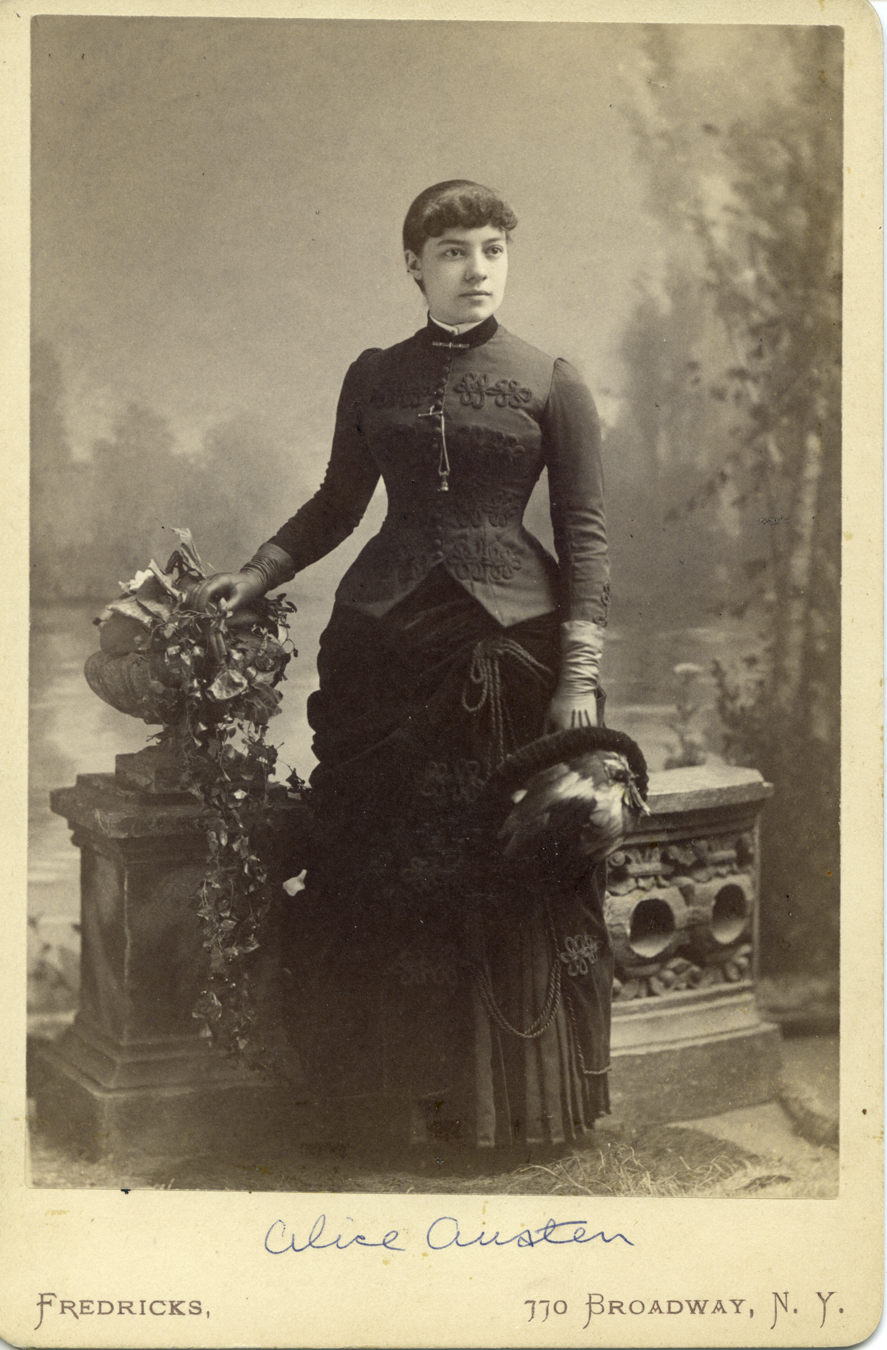
Alice Austen by Fredericks Studio, c. 1885
Read more
This image is a cabinet card from the celebrated New York photographic studio of Fredericks. One of the leading portrait studios in New York, Fredericks photographed society figures, performers, politicians and wealthy New Yorkers. Here she would have been her late teens. She assumes a orthodox pose, in contrast to later photographs that show a less conventional Alice. She was fascinated by photographic equipment and processes, so occasionally visited professional studios for research purposes.
This period was something of a turning point in photographic history. The image was made by a professional studio using one of the most polished commercial portrait formats available. Yet at roughly the same time, Alice Austen was becoming part of a new generation of photographers who were taking cameras out of the studio and into everyday life.
Cabinet cards (c. 11 x 17 cm) became fashionable in the 1860s and were designed to be displayed, rather than put in albums. The studio branding was always displayed prominently and were almost like luxury fashion labels.
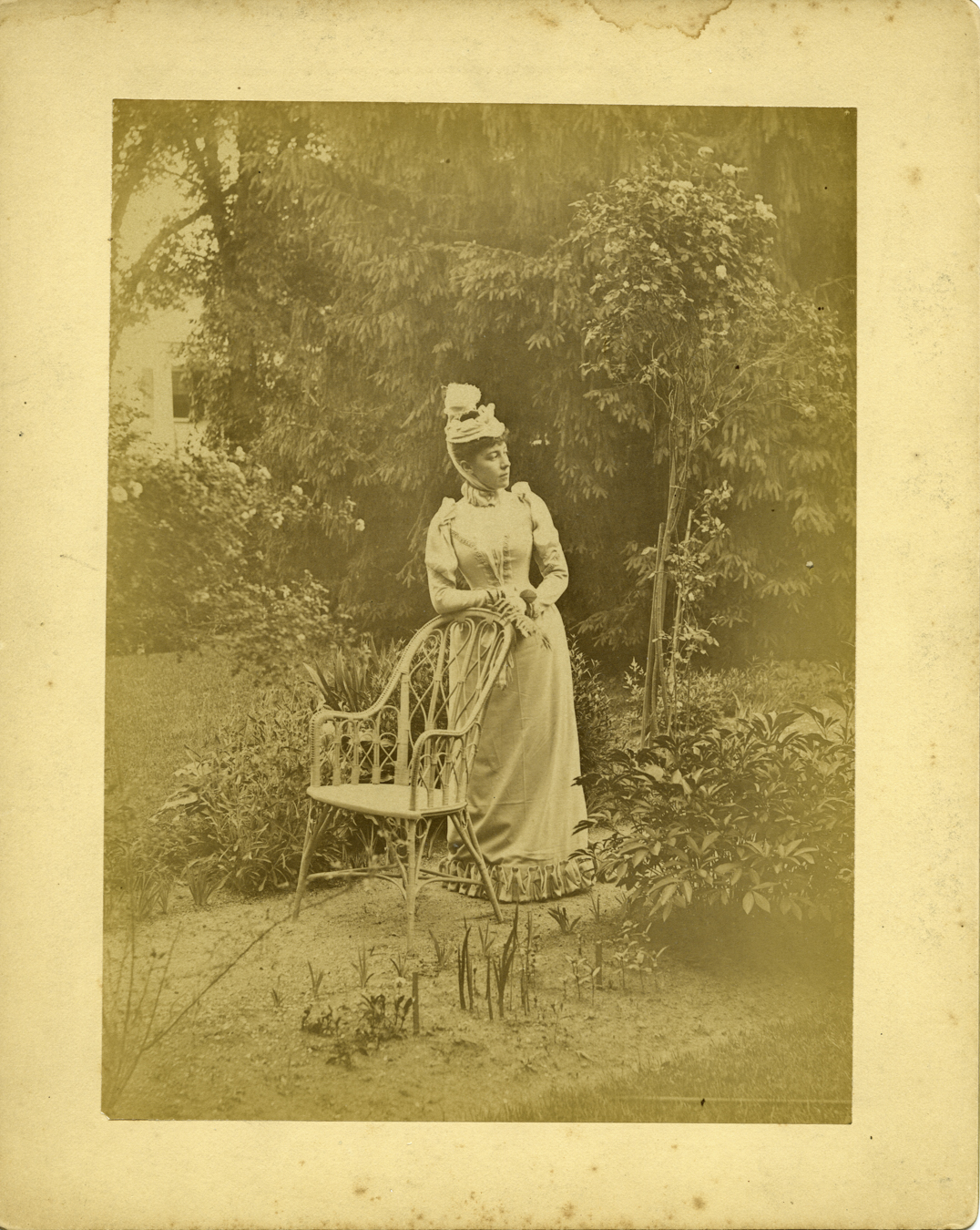
Alice Beside a Chair in Garden, c. 1890
Read more
In this carefully composed portrait, Alice Austen poses among the gardens of Clear Comfort, her family home on Staten Island. Using a wicker chair as a prop, she adopts the conventions of a Victorian studio portrait while taking advantage of natural light and an outdoor setting. The image presents Austen as a respectable young woman of her time, yet it also hints at the photographer she would become, already experimenting with composition, setting and self-presentation.
The chair is a beautiful piece of late Victorian wicker or rattan furniture. Wicker furniture became fashionable in the 1880s because it was associated with healthy outdoor living and affluent middle-class gardens. It signals, leisure, domestic comfort and social status. In other words, it tells us as much about the Austen family’s lifestyle.
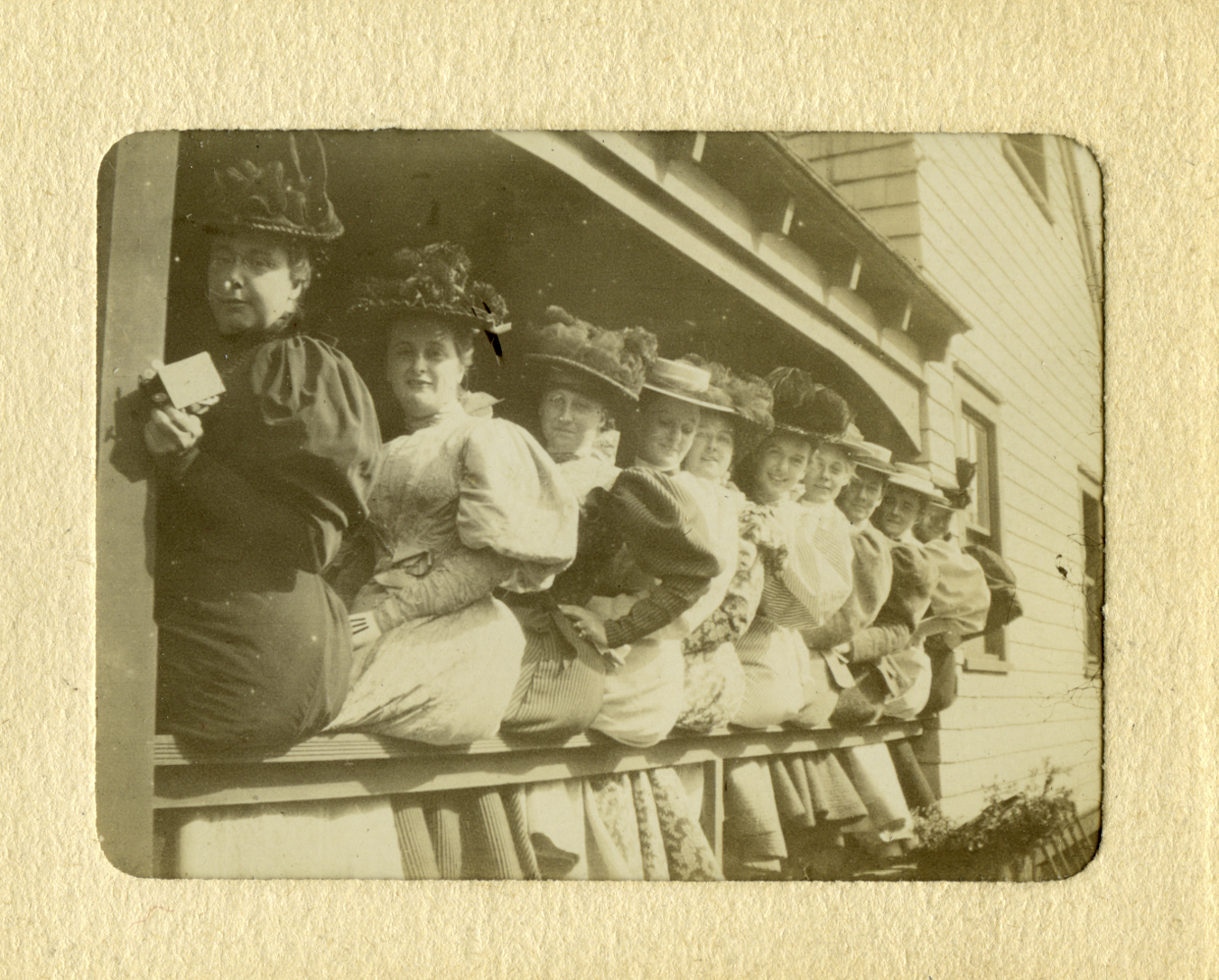
Alice Austen, Eleven Women Sitting on a Porch Railing c. 1895
Read more
An image that shows that Alice Austen’s world was not quite the buttoned-up Victorian universe they imagined. At first glance, it seems simple: a group of young women perched along a porch railing at Clear Comfort. But the pose itself is unusual. Victorian women were generally expected to sit properly in chairs, maintain decorum and avoid anything that might appear unladylike. Here, eleven women are balanced on a railing, crowded together, relaxed and seemingly enjoying one another’s company. What makes the image so appealing is its informality. Rather than presenting themselves as dutiful daughters or future wives, the women appear as a social group with its own energy and identity.
From a queer history perspective, the photograph is fascinating because it records a world centred on women. We cannot know the nature of every relationship pictured, but Alice’s archive repeatedly returns to gatherings of women enjoying one another’s company without male supervision or intervention. That alone challenged many assumptions about how respectable women should spend their time.
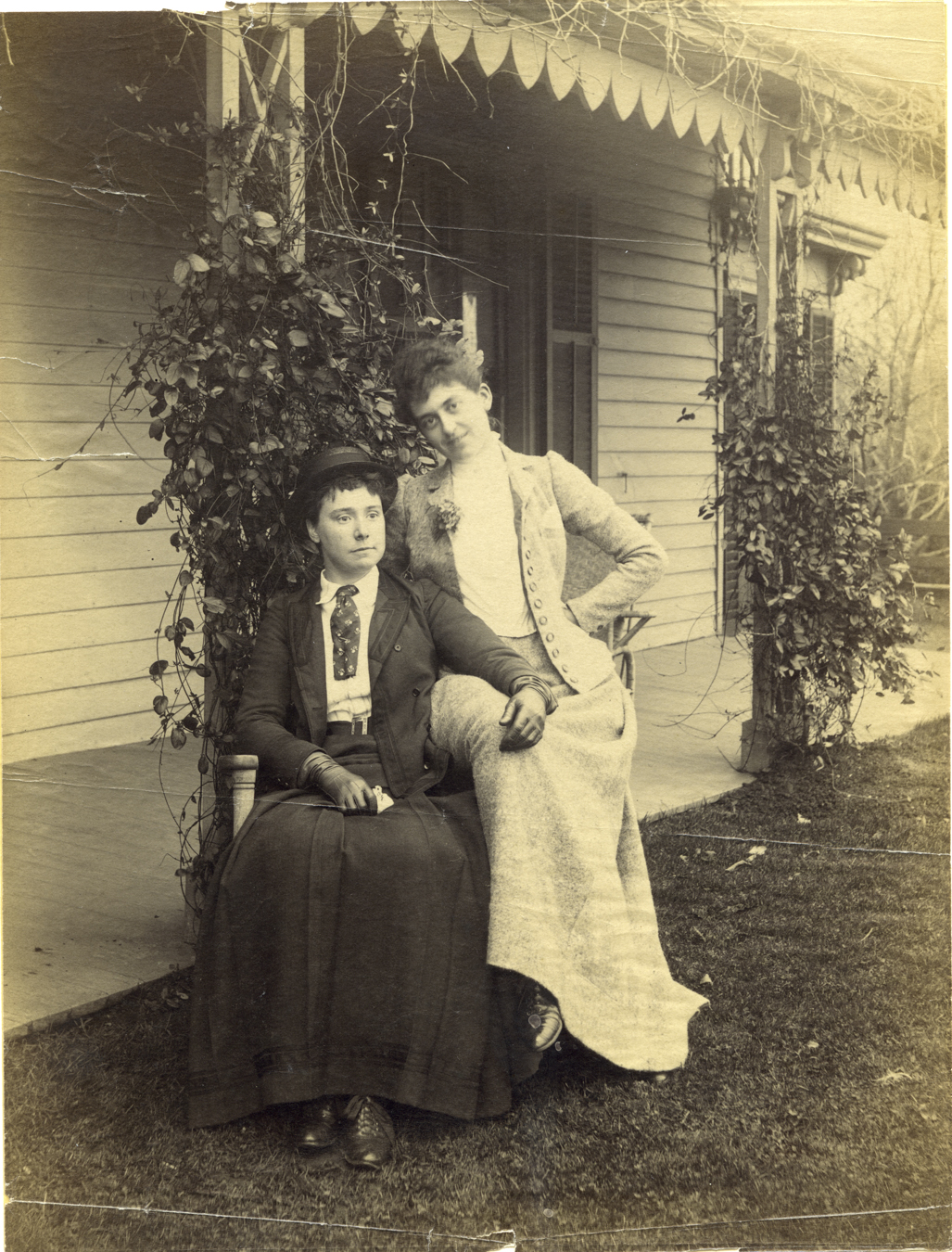
Alice Austen, Violet Ward and a Friend at Clear Comfort, c.1900
Read more
This image comes from the period in Austen’s life, when her photography had become more assured and less concerned with formal Victorian portrait conventions. Maria E Ward, known as Violet, was part of the extended circle of women who appear throughout Alice’s photographs. Violet was the author of Bicycling for Ladies: The Classic 1896 Guide to Skills, Exercise, Mechanics, and Dress, an influential guide apparently promoting cycling for women, but in reality it was about freedom – choice of attire, independent travel and challenging assumptions about female fragility.
Alice contributed photographs to the book, and the two women shared an enthusiasm for cycling at a time when bicycles were becoming symbols of female independence. Their friendship formed part of a wider network of women challenging Victorian expectations and creating new possibilities for how women could live, travel and move through the world.
We have a copy of ”Bicycling for Ladies” in the museum, sadly only a reprint, not the original.
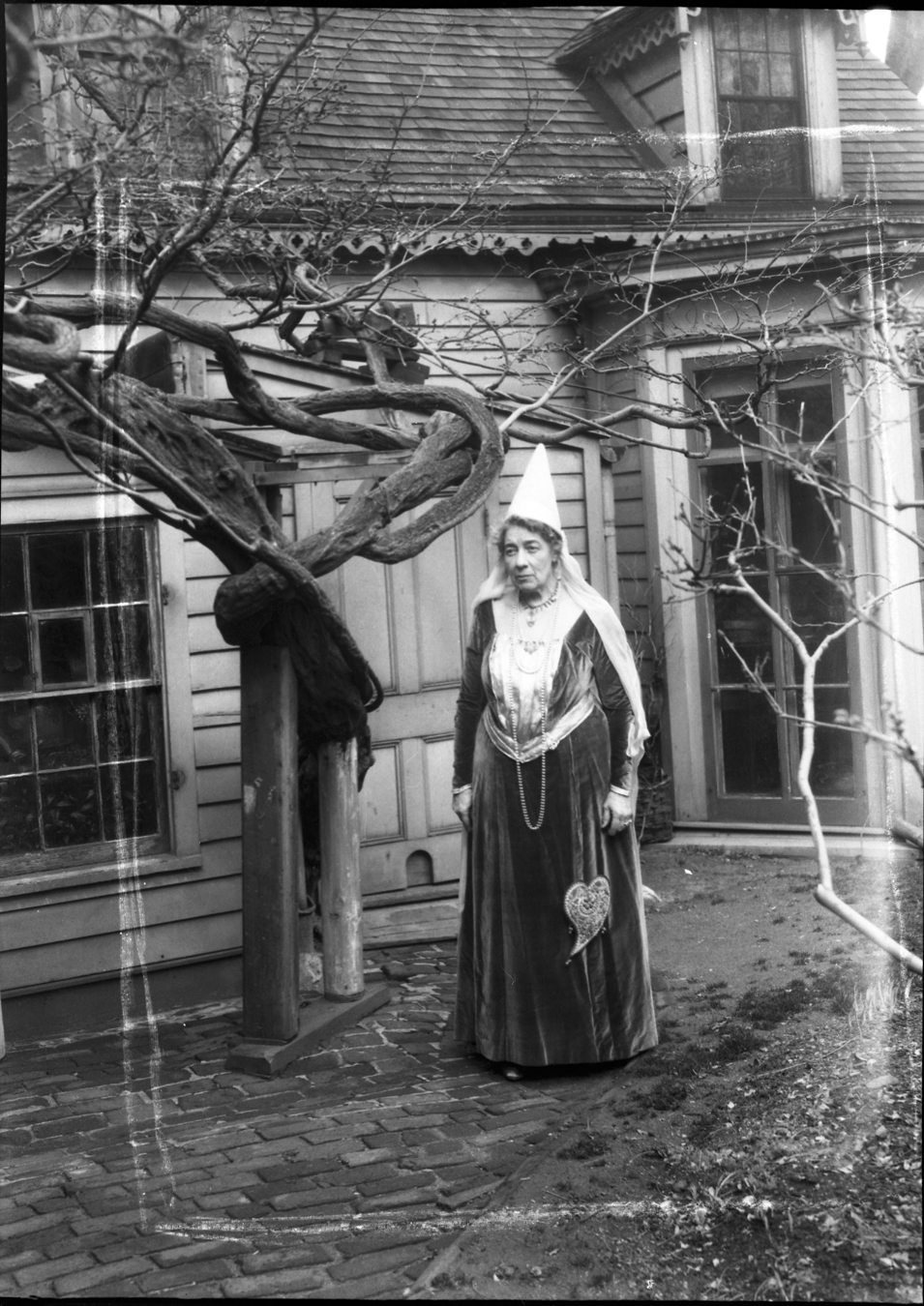
Alice Austen Dressed in Costume c.1930
Read more
By 1930, Alice was in her sixties. The world had changed dramatically since the photographs of porch railings, wicker chairs and cycling adventures. Women had gained the vote, photography had become commonplace and Victorian society was rapidly receding into memory.
The image shows a wonderful contrast between fantasy and reality. Here is Alice Austen, standing in the garden of the house she had known for decades, dressed as though she has stepped out of a medieval manuscript. The photograph reminds us that costume can be an act of imagination, allowing us to inhabit other times, places and identities.
There’s also a poignant historical backdrop. By around 1930, Clear Comfort (her home) was under increasing financial pressure. Within a few years Alice would lose the house altogether. Seen in that light, the photograph becomes something more than a fancy-dress portrait. It feels like a moment of play and self-invention in a world that was becoming increasingly uncertain.
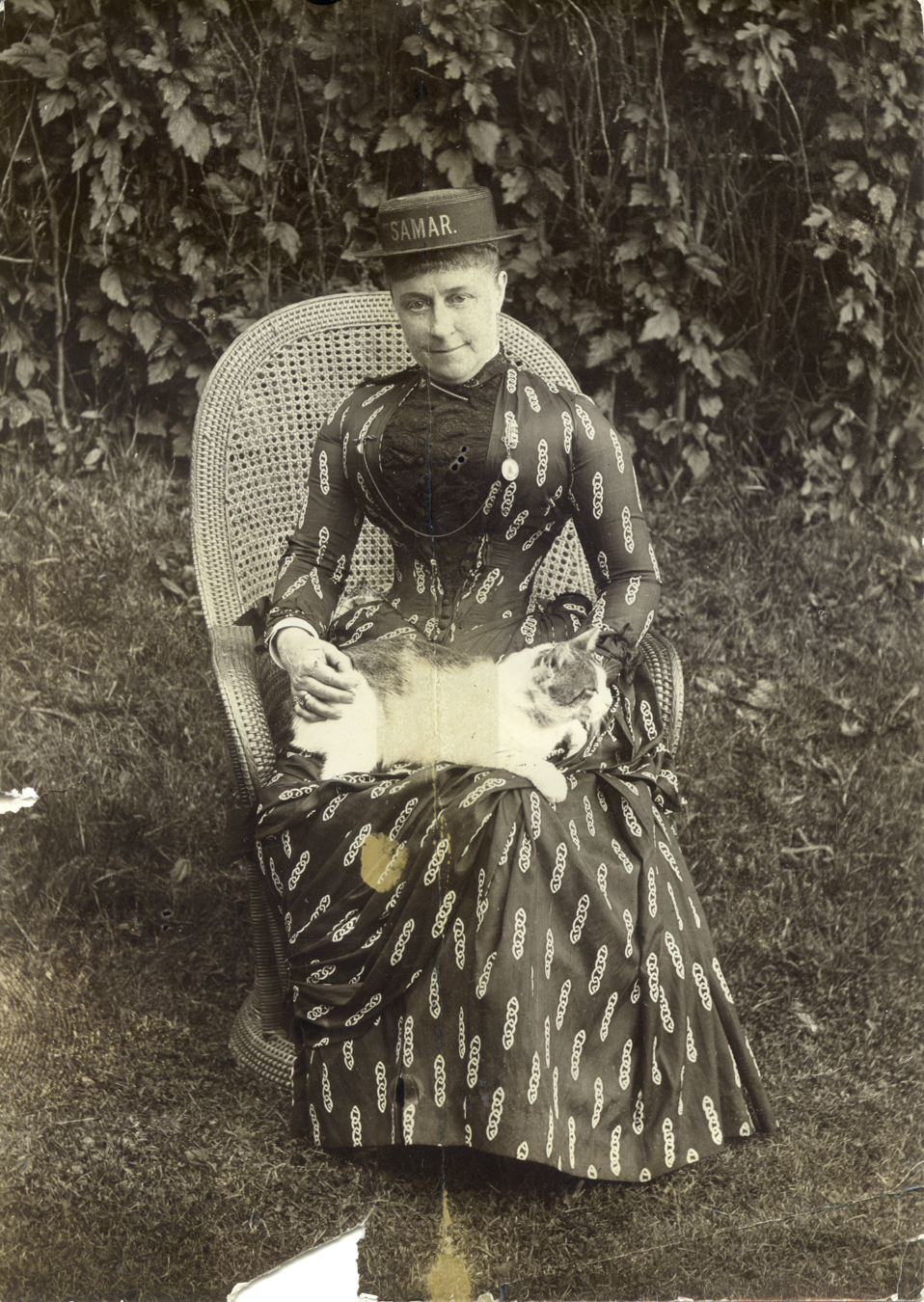
Alice Austen, Aunt Minn wearing SAMAR hat, c. 1890
Read more
Mary Haggerty Austen Muller ‘Aunt Minn’, (1840-1918) was Alice’s mother’s younger sister. She played a central, motherly role in Alice’s upbringing after her mother’s death in 1900 and frequently appears in the photographer’s vast collection of images. An accomplished musician, married to a Danish sea captain, who first taught Alice photography. Aunt Minn was well travelled and brought home plants and objets d’art to furnish their eccentric extended family home. Minn and Oswald lived in an upstairs room to which they added an enclosed porch dubbed, “The Quarterdeck”.
The meaning of “SAMAR” remains uncertain. However, given the sea-faring connection, the inscription may refer to a ship, voyage or maritime destination connected to the family.
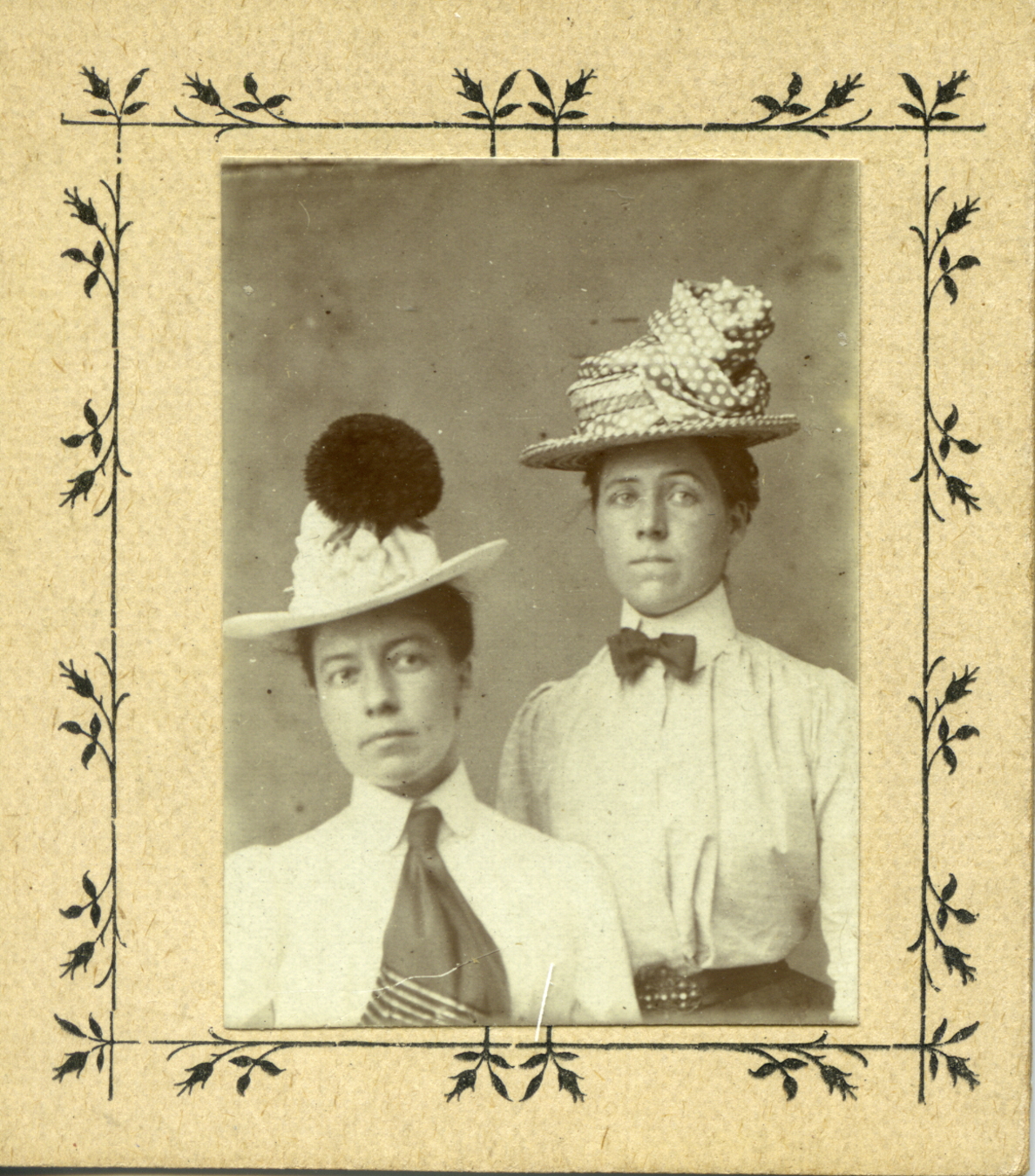
Alice Austen and Gertrude Tate at Pickard’s Penny Photo, c.1901
Read more
The title suggests they visited one of the inexpensive commercial portrait studios that sprang up around New York at the turn of the century. “Penny Photo” studios offered quick, affordable portraits, rather like Victorian photo booths. People often used them to experiment with poses and identities that might have felt less appropriate in a formal studio.
Points of interest
It’s worth remembering that Alice Austen and Gertrude Tate would remain partners for more than fifty years. Photographs such as this one reveal a relationship willing to play with social conventions.
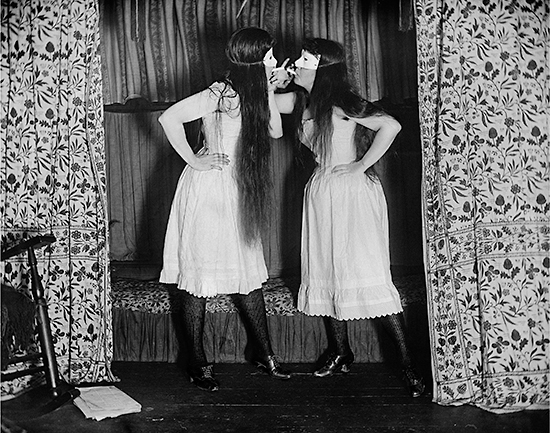
Trude and I Masked, 1891
Read more
Alice Austen and her friend Trude Eccleston pose in matching costumes, masks and flowing hair, creating a playful theatrical tableau. The photograph was made for a private album rather than a public audience, allowing the pair to experiment with disguise, performance and self-presentation.
This image shows an extraordinary theatricality. And the performance feels deliberately ambiguous. They appear almost as mirror images, each reflecting the other. The masks conceal identity, yet everything else emphasises connection and similarity. For a Victorian audience, the cigarette and loose hair would have been striking. Women certainly smoked, but it was still associated with modernity, bohemianism and independence. The fact that they are sharing the cigarette is particularly interesting, creating a sense of intimacy. And as for the hair, respectable Victorian women wore their hair pinned up in public …
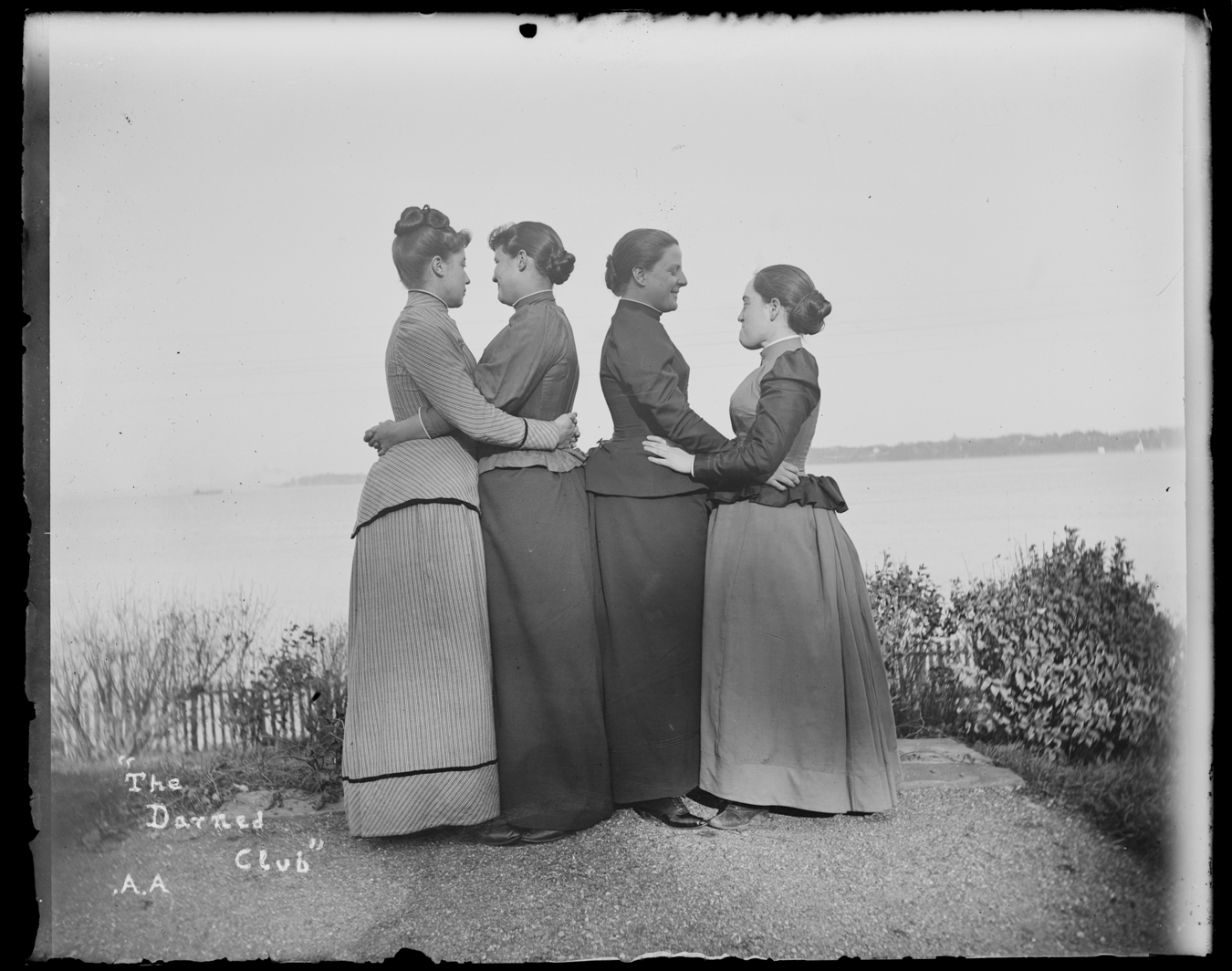
Alice Austen, The Darned Club, 1891
Read more
Alice Austen and her friends Trude Eccleston, Julia Marsh Lord and Sue Ripley formed a close-knit social circle that local young men reportedly nicknamed “The Darned Club” after finding themselves excluded from it. Whether friendship group, private joke or declaration of independence, the women appear entirely at ease in one another’s company.
More than a century later, the photograph remains a powerful image of female companionship, affection and solidarity.
Texts and research by Harper Black, Katya Lee Browne and Paula Vellet,
This exhibition has been generously supported by: