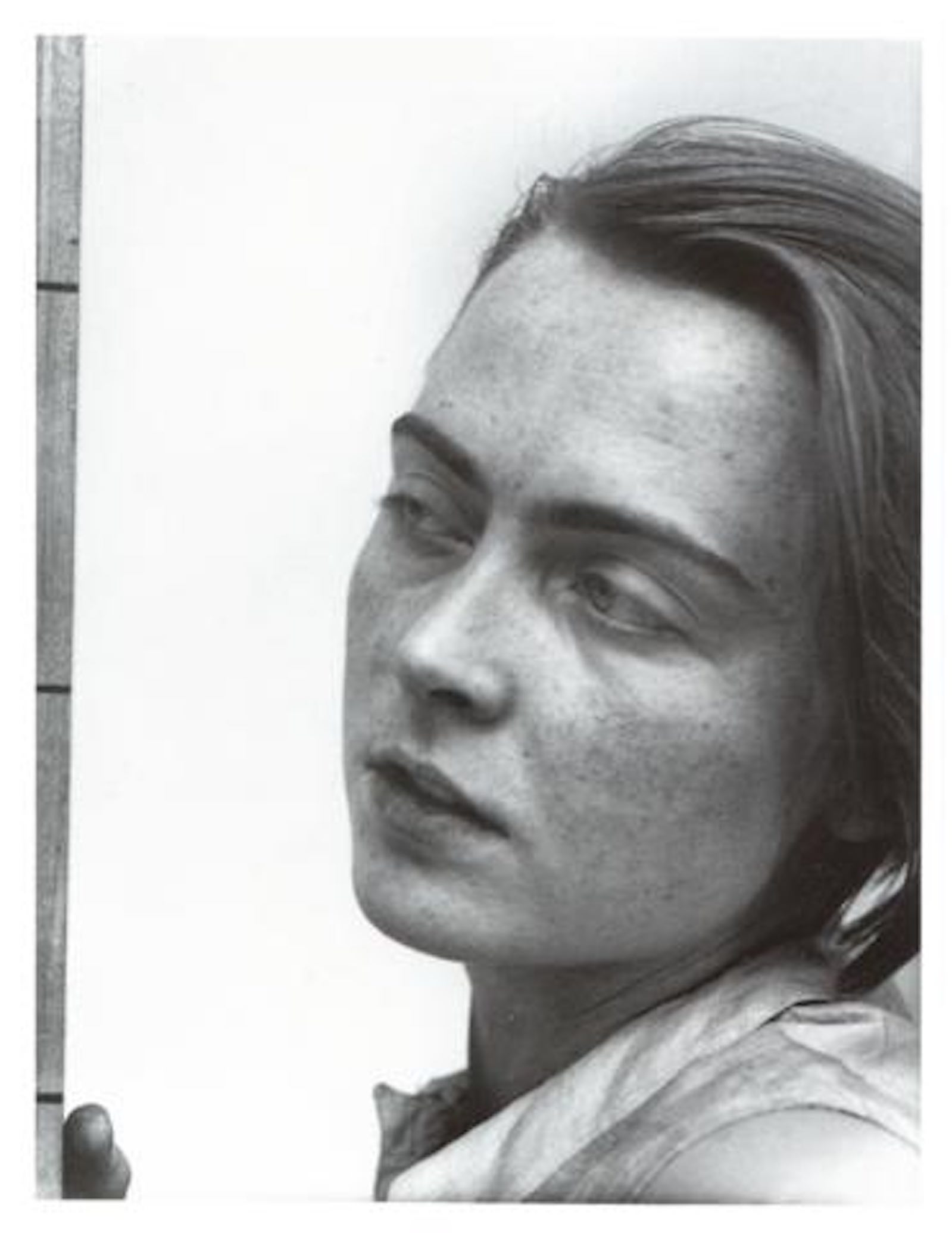
Self Portrait
Elisabeth Hase (1905–1991)
German advertising and architectural photographer
Elisabeth was a German advertising and architectural photographer active in Frankfurt from 1932 until her death in 1991, at the age of 85. Contemporary of Ilse Bing and Germaine Krull, her black and white work spanned the Weimar Republic to post-WWII Germany and her commercial career was pioneering for a woman.
Elisabeth studied typography and commercial art from 1924 to 1929 at the School of Applied Arts, Frankfurt and later at the Städelschule. She took architectural and still life photographs in the early 1930s in the avant garde ‘New Objectivity’ style for the magazine Das Neue Frankfurt (The New Frankfurt) and documentary photographs of modern housing projects, including those of Ferdinand Kramer.
Elisabeth opened her own advertising and press photography studio in 1932. She focussed on beautifully lit floral still lives and often modelled for speculative photographs during the Nazi era, combining New Objectivity and surrealism – one self-portrait shows herself warped in the reflection of a silver sphere. In another from 1948, she is sprawled over a staircase. Many featured close ups of dolls. She has been called the Cindy Sherman of her day.
Her 1950 photograph ‘Two prisoners’ showing a caged lion and an amputee looking at each other is particularly striking, reminiscent of her 1934 confrontation between a crying woman covering her face and a clergyman with his back to the camera.
Her studio survived the bombing of Frankfurt and she resumed commercial work after the war.
Many of those works are now part of the collections held by the Folkwang Museumin Essen, MoMA and the Albertina Vienna, and her own website Elisabeth Hase Photographer shows her extensive range and skill. Her estate is represented by the Robert Mann Gallery, New York. The 2003 Steidl photobook explores her career.
Photobook