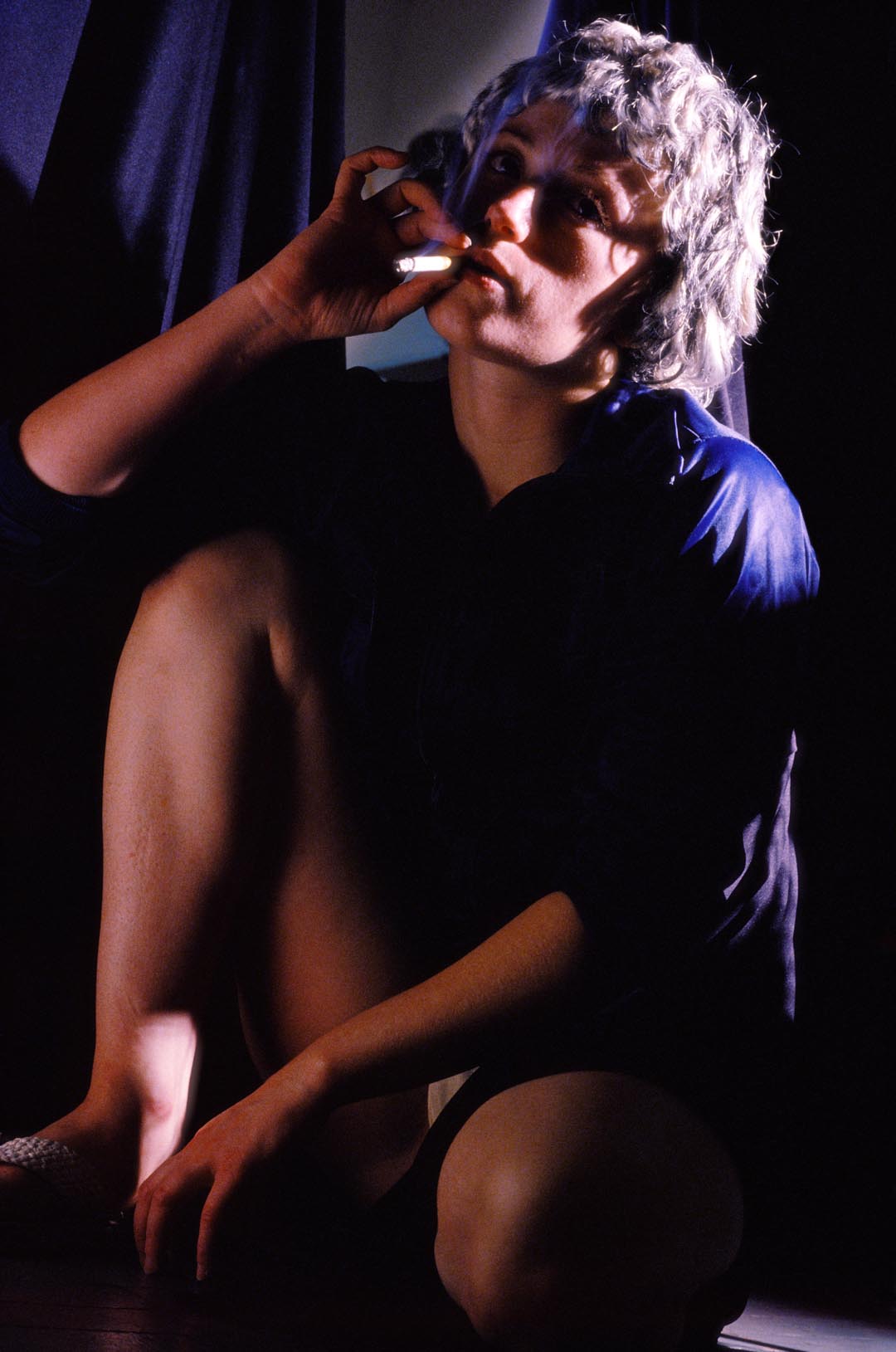
Cindy Sherman, Untitled #113, 1982. Courtesy Cindy Sherman, Fondation Louis Vuitton, Paris, Hauser & Wirth and Sprüth Magers © Bildrecht, Vienna 2026
Feminist Futures Forever
Four dancers are rehearsing Swan Lake. They practise the same movements over and over again. Sometimes they get it right, sometimes they don’t. It’s completely mesmerising, and I could have watched them for hours. But there’s so much more to this than a ballet rehearsal.
During the Soviet era, television broadcasts of Swan Lake were used to conceal political upheaval. When something momentous was happening behind the scenes, the familiar ballet would be played on a loop for days on television screens across the country (Sky History).
Anna Jermolaewa has taken this bizarre piece of history and, working with Ukrainian choreographer Oksana Serheieva, turned it into Rehearsal for Swan Lake (2024). The dancers’ determination to keep going becomes a powerful metaphor for resistance and the hope of political change. Before seeing the installation, I had never heard of this Tchaikovsky smokescreen – my bad for not paying enough attention to the 2024 Venice Biennale – and it set the tone of the exhibition for me; the works made me think and I left wanting to find out more, much more.
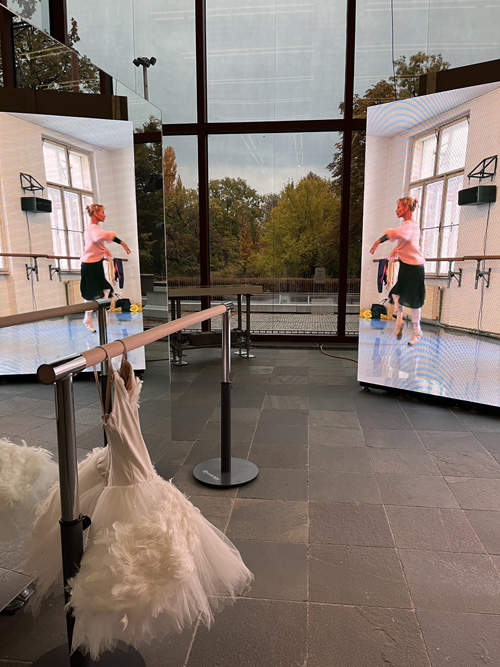
Installation by Anna Jermolaewa/Oksana Serheiva. Rehearsal for Swan Lake, 2024/2026
Feminist Futures Forever, has just opened at Belvedere 21 in Vienna and it’s like a wonderfully extended, remastered, deluxe version of the 1985 exhibition Kunst mit Eigen-Sinn (Art with a Mind of its Own), a groundbreaking exhibition of work by women artists (incidentally, shown in the same same building before it was Belvedere 21) – and the inspiration behind the current exhibition. The first version was not without controversy, particularly over whether women’s art should be recognised as such and whether institutional recognition represented progress or surrender to a patriarchal structure. Fast-forward forty-one years and progress has been made insofar as visitors are no longer completely surprised that women’s art is exhibited or even that it can be a “sauber organisierte Präsentation [a neatly organised presentation]” (Falkenhausen, 1985). But progress in terms of dismembering the tentacles of the patriarchy remains pitifully slow …
The exhibition brings together a wide range of feminist artistic practice by 238 artists. Displayed in nine sections, each area comprises a narrative showing that “structural inequality in patriarchal societies has far-reaching effects – from the street and the workplace, through to the bedroom and bathroom” (Press Release).
Although I didn’t come away with a neat summary of the nine themes, I did experience a magnificent compendium of individual encounters, which I thoroughly enjoyed.
It was fabulous to see the work of so many Heroines past and present represented including Adrian Piper, Birgit Jürgenssen, Cindy Sherman, Helen Chadwick, Lisl Ponger, Martha Rosler, Nil Yalter, ORLAN, Renate Bertlmann, Sophie Calle, Sarah Lucas, VALIE EXPORT and Zoe Leonard, many of whom had participated in the 1985 exhibition. Each artist offers a unique perspective of feminism and contributes valuable layers to the overarching narrative. And it is exactly this trail-blazing that led the jury to elect these artists as Heroines when we started our campaign.
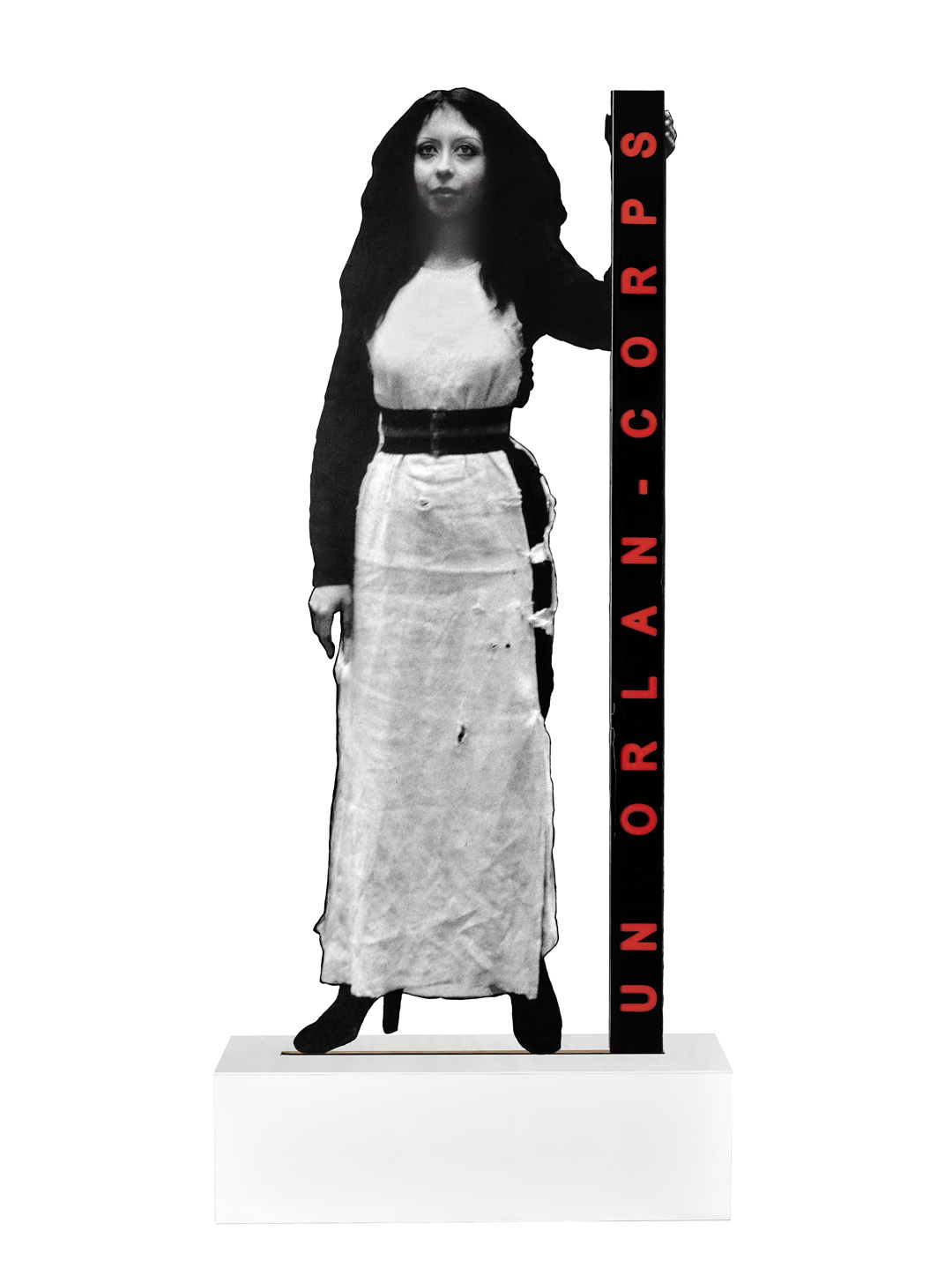
ORLAN, ORLAN en gardienne de l’ORLAN corps, 1980/2023. Courtesy VERBUND COLLECTION, Vienna © ORLAN / Bildrecht, Vienna 2026
I found the intergenerational dialogue between the original artists and the more recent works a true voyage of discovery, highlighting that there is still so much originality in a world that often feels oversaturated with images that we feel we’ve seen before.
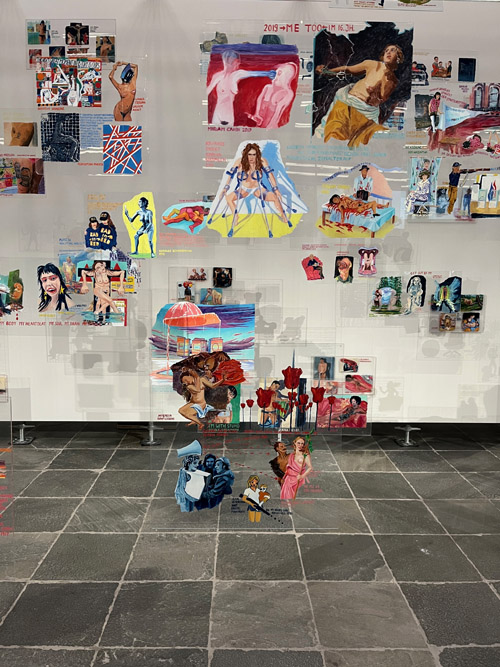
Anna Meyer’s enormous Futurefeminismus (Wir lebten in hundert Jahren) is a bold, colourful and complex installation that deserves its own visit to fully appreciate the 69 perspex panels on which the artist has painted miniatures in oil creating a visual who’s who of feminist art history.
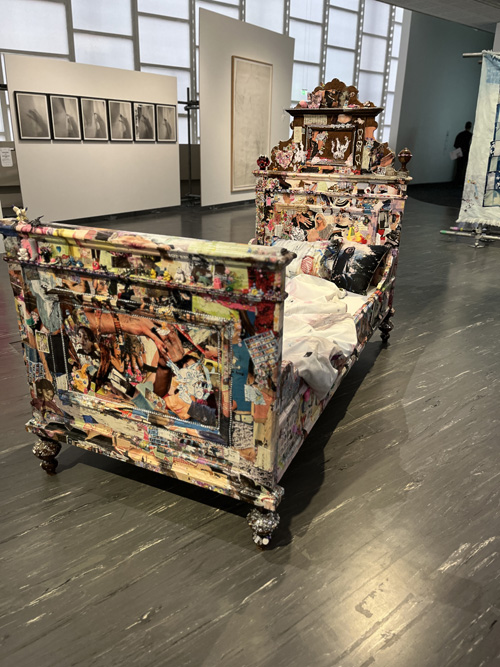
Amanda Burzić’s A Room Full of Yous 1 comprises her childhood bed, now exquisitely decorated. Visually, it takes collage to a whole new level; conceptually, it explores the formation of identity much of which evolves in the teenage bedroom.
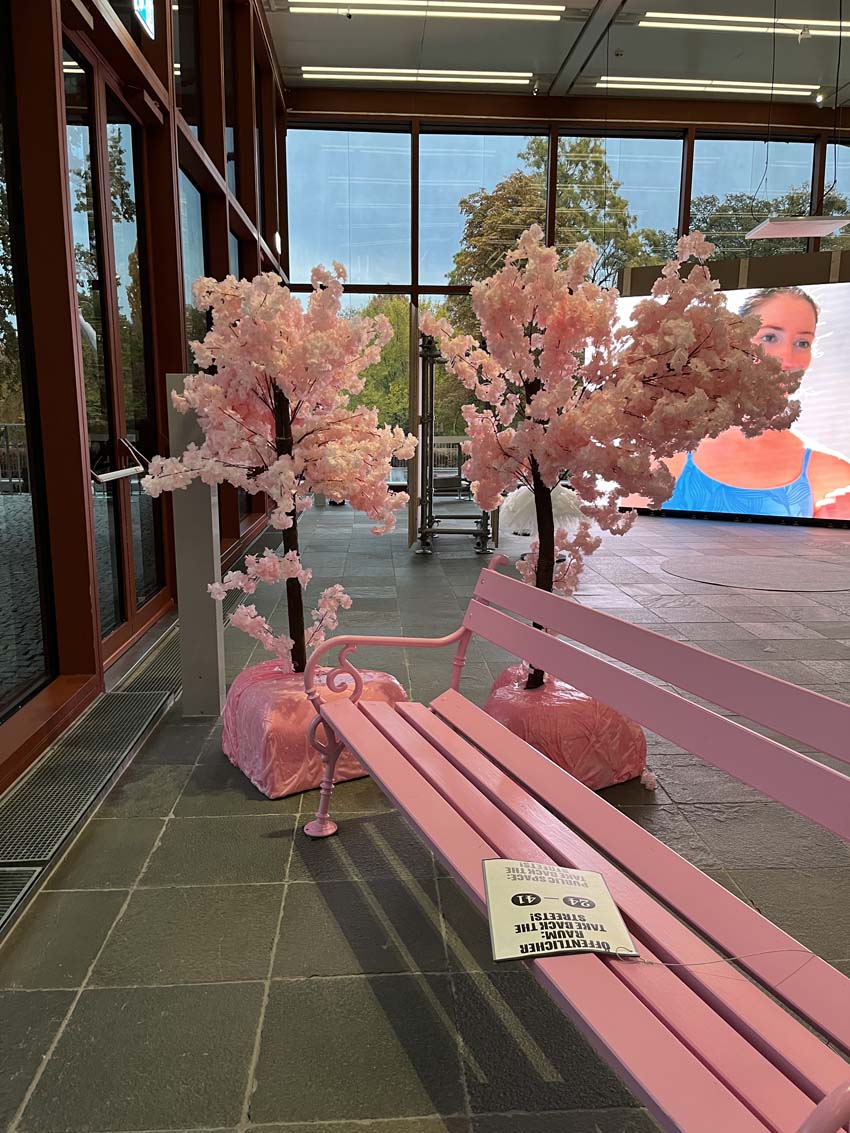
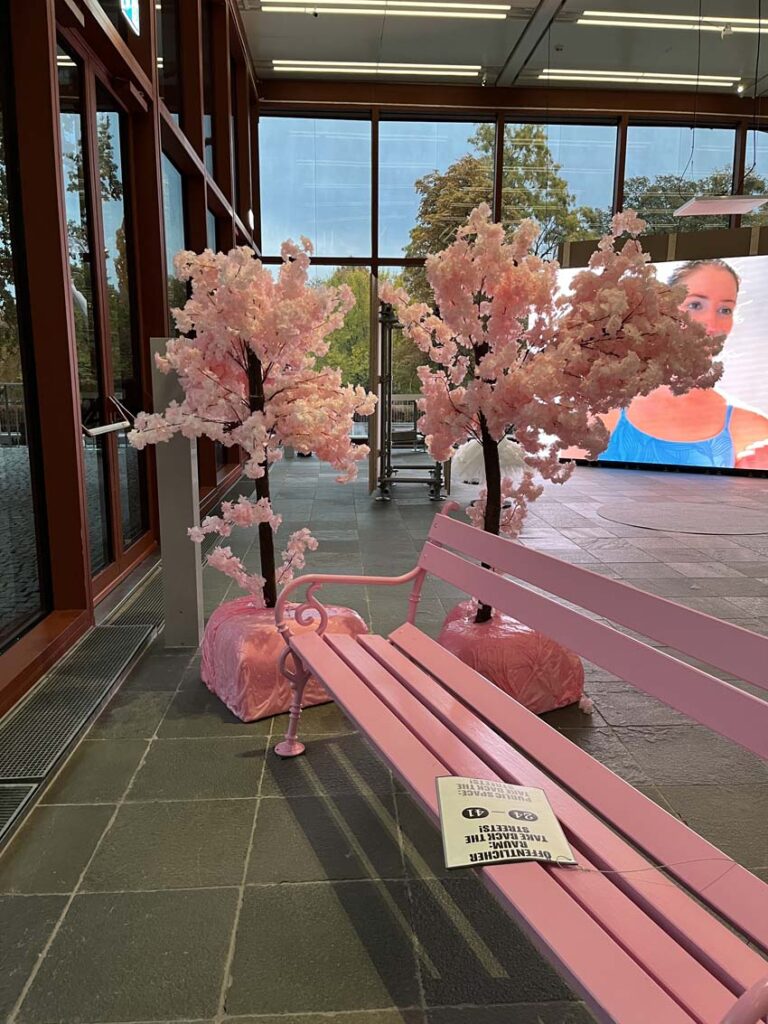
Hannah and Lea Neckel’s pink bench nestling between the paper cherry blossom looked wonderfully inviting, but years of being told not to touch things in museums meant that I kept a respectful distance – although I don’t actually remember seeing a ‘do not sit here’ sign. A question for my next visit…
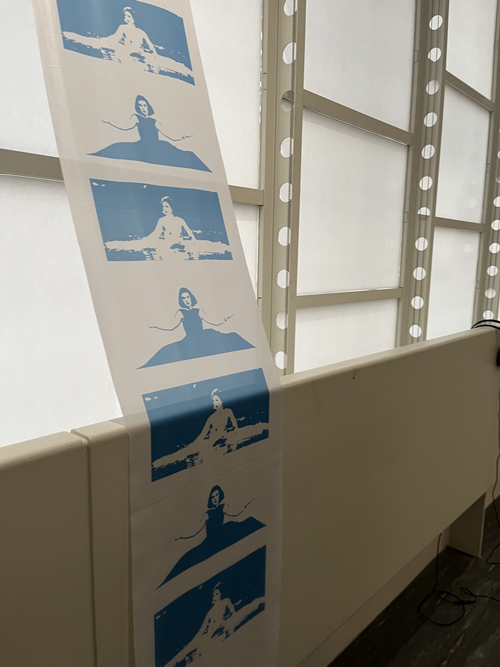
I had the pleasure of meeting Michaela Melián who talked me through her work – two images of film star Hedy Lamarr (taken from film stills and repeatedly watercolour stamped) juxtaposed with a textile covered wooden submarine. Hedy was the first film star to stimulate an orgasm on screen and the first to appear in a film naked – both of these in 1933. However, her true claim to fame is that she patented the idea that underpins Frequency Hopping, a system that allows secret communications between naval vessels, used for the first time during the Cuban missile crisis of 1962 by the US Navy.
With 238 artists, this is not an exhibition to be absorbed in an hour. Or even two. I spent three hours there and only later realised that I still hadn’t had time to give everything the attention it deserved. However, it’s running until March 2027, so time to make a few return visits to fill in the gaps.
Sitting on the tram, I was still reflecting on the complexity of the exhibition, the talent of the curators in bringing it all together, the genius of using scaffolding for the display emphasising how feminism is still a work in progress, the title that offers the allure of a feminist future, coupled with the reluctant acceptance of the amount of work we still have to do to achieve it, and a huge admiration for Stella Rollig (retiring Director of Belvedere 21) for choosing this exhibition as her swansong. And, of course, I always wonder about the size of the budget involved, but being British, I’m too polite to ask. With the music from the Dance of the Cygnets still ear worming its way through my head, I also got to thinking how the BBC might respond to an enforced news blackout for a political crisis in Britain. The Archers on a permanent loop?
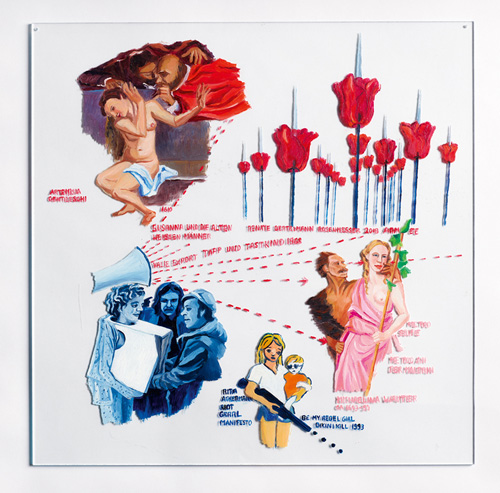
Anna Meyer, Futurefeminismus (Wir lebten in hundert Jahren) (Future Feminism (We lived in one hundred years)) (detail), 2007–23, Belvedere, Vienna, 2023 purchased from Gallery Krobath, Vienna; photo: Johannes Stoll / Belvedere, Wien © Bildrecht, Vienna 2026
Feminist Futures Forever
- Curated by Christiane Erharter and Stefanie Reisinger
- Belvedere 21, Vienna
- Until 8 March 2027