Polaroids from Tracey Emin: A Second Life
Self Portrait 12-11-01, 2001, Self-portraits – Blood, 2020-5 and the Tate Tunnel
Review of Tracey Emin’s photographic series in the exhibition A Second Life at Tate Modern until 31 August.
Closing this week, Tracey Emin: A Second Life, has provided a monumental reckoning of four decades of the artist’s work – as well as those lost throughout her metamorphosis – that persistently examines the phases her mind and body have endured. So much of Tracey’s emotional and physical experience is transposed into the plethora of mediums she has mastered, as the oftentimes piercing sadness of her first life is scrawled in ink, stitched into quilts, or recorded in clips of Margate and Regent’s Park, accompanied by the Dame’s distinct tone.
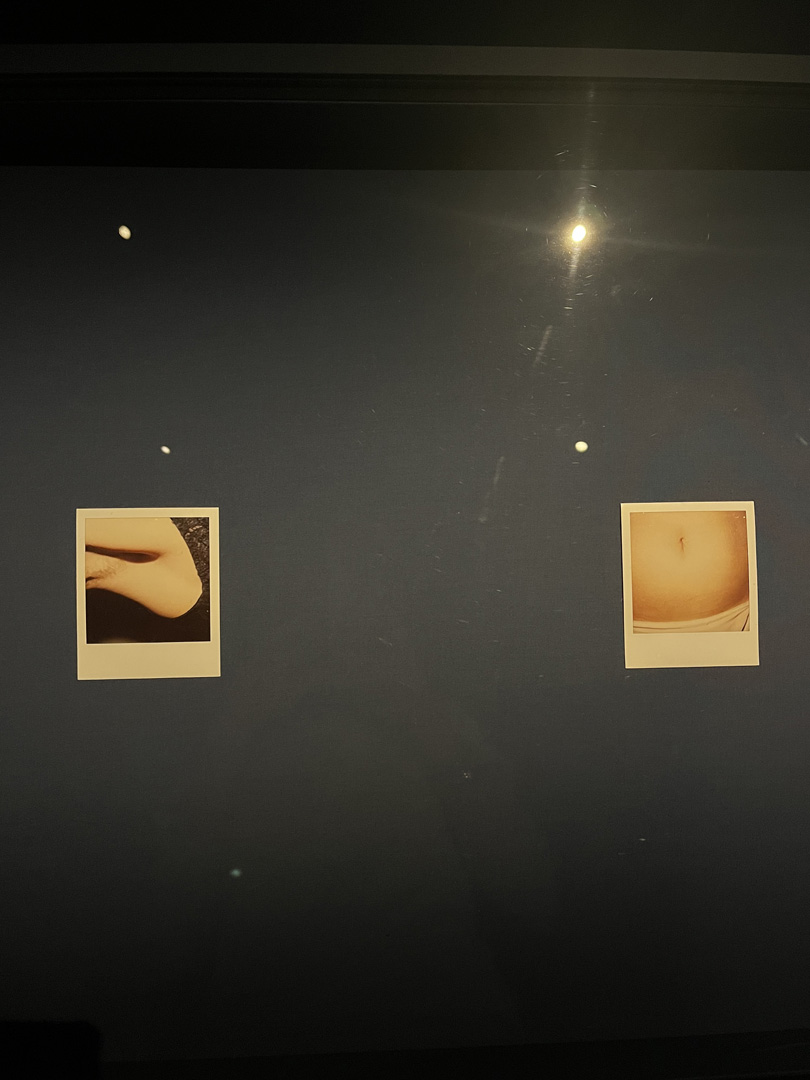
Despite this, nowhere in the exhibition does the idea of her Second Life feel clearer than in the two photographic series: Self-portrait 12-11-01, 2001 and Self-portraits – Blood, 2020-5, presented on either side of a low-lit corridor, marking a bridge in the exhibition.
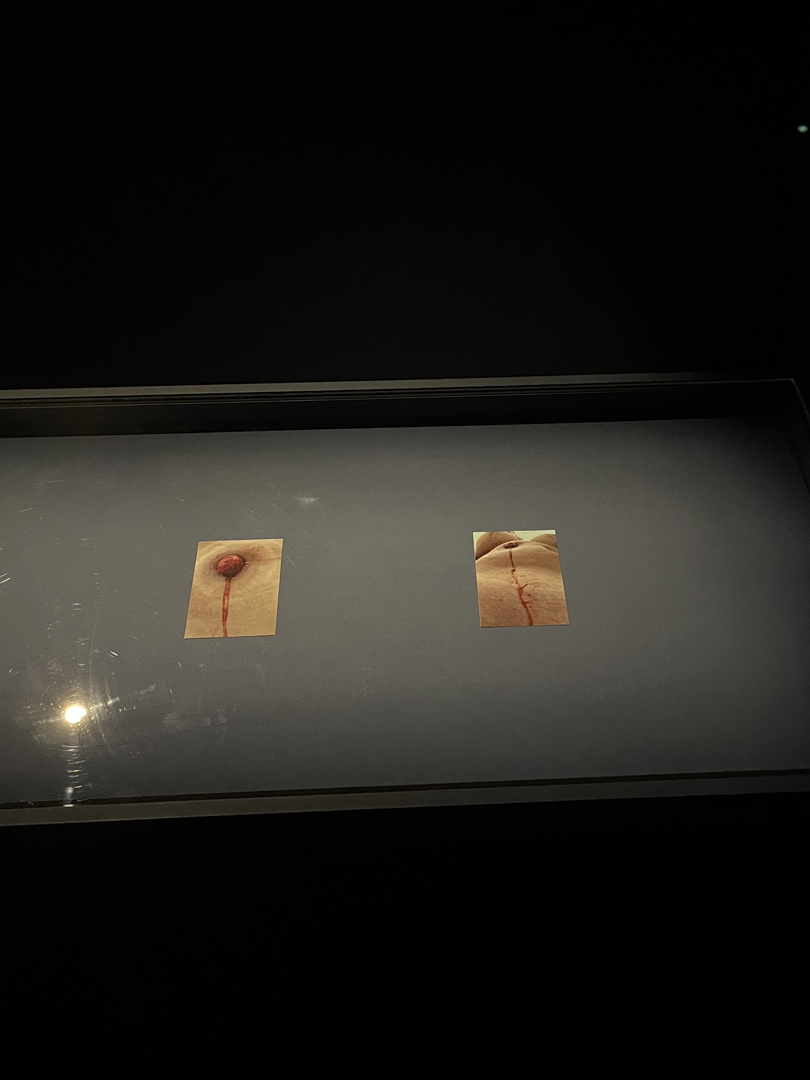
Though at this point in the exhibition the audience has already read passages on Tracey’s experience of child sexual abuse, witnessesed sometimes-graphic depictions of rape, I notice that it is Self-portrait – Blood, 2020-5, that garners the most visceral reactions. Standing there, stranded in the chasm between her former and present body, fellow viewers take hasty glances at photographs of the artist’s bleeding body, identify her unconventionally uncovered stoma, before averting their gazes and hurrying along to find refuge in the sheets of her infamous [My] Bed.
Tracey’s directness about her subject has come to be a trademark of her work. Often communicated through frank statements, as simple as ‘IS THIS A JOKE’, it should not be shocking the rawness with which the artist has documented her daily experience living in her body after her 2020 bladder cancer diagnosis. But standing here in this corridor, almost contemplative in mood, the pictures are unexpected, a new photographic exploration of female suffering.
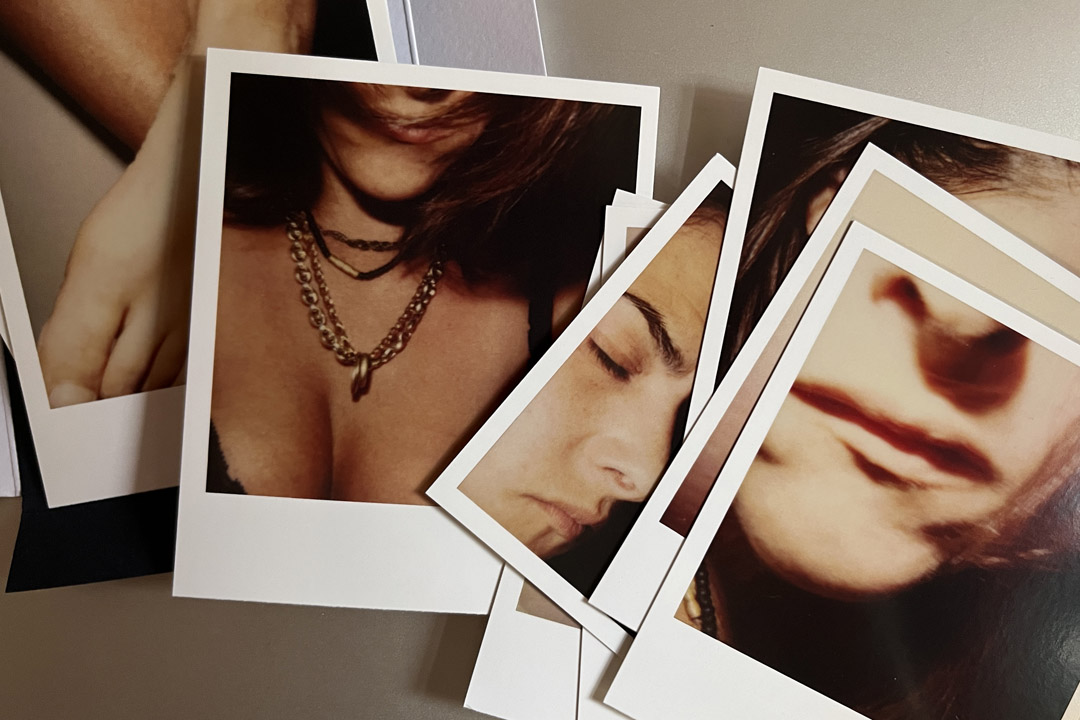
In the artist’s polaroids from 12-11-01, her body aligns with the centuries-old female ideal – soft and fleshy skin, oozing femininity. The angles are unconventional – taken largely from above, or close-up her stomach or armpit – but present a woman seemingly comfortable in her skin.
Casual in nature, the portrait is the type of picture one could take on any random midweek evening when “feeling themselves” – nice bra, more practical cotton briefs. And though not overtly sexual, there is a certain seductive quality in her beauty which can be read.
It is Dame Tracey’s 2020-5 development on this style of photograph that catches the viewer off-guard. She has spoken widely about her experience with cancer, describing it as ‘the biggest thing to happen’ to her, and acknowledging its role in saving her life. Just 13 days after diagnosis she underwent a seven-hour-long surgery, removing her bladder, urethra, ovaries, lymph nodes, part of the intestine and vagina, as well as having a full hysterectomy, speaking in a BBC interview about her relief that the Doctors were able to preserve her clitoris.
The documentary photographs, displayed in this narrow space, brings us closer to the artist’s corporeal existence than her painted form seen throughout the retrospective; the same body, life-changingly altered and disabled as a result, stands, sits, lies, directly opposite its predecessor. Again, we see her body from unconventional angles, but this time any glimpse of sexuality that could be gleaned from an underboob, is diverted from by the bright-red opening below, a bodily image foreign to the average viewer.
Radical in nature, as is so much of her work, the series counters every previous vision of the idealised female form, and instead affronts the viewer with the reality of a suffering, recovering body. At the same time, it is reminiscent of Jo Spence’s 1982 Cancer Shock Photonovel, which documents the artist’s breast cancer diagnosis and subsequent lumpectomy, showing her scarred side-boob. Similarly, parts of Tracey’s body associated with femininity, and by extension both sexuality and maternity, mistreated in their first life, are now surrounded by keyhole scars, post-op underwear, and trails of non-menstrual blood – marks of a treatment enabling the artist’s rebirth.
Where Jo Spence’s precedent is comically alleviated with witty captions, Tracey’s is silent, with only the sense of Self, addition of Blood, and her 2001 polaroids to speak for her in this near-meditative space. The 2020-5 photographic series maintains the artist’s characteristic honesty, but creates a new type of intimacy with the viewer.
Photography of surgically altered, disabled, female bodies are far and few between, usually confined to the notes of Doctors or Medical students. Presenting these works, on a macro-scale, at the Tate, and still on a fairly-macro scale, as the starting point of the artist’s new life, not out of choice, but necessity, radically recontextualises them, and the unseen experiences of many.
‘Women bleed. We cry, we bleed, we shit, we vomit. We live, we give birth. We do many things. The whole body’s just crying. The whole body is things coming out. And as an artist, things are coming out.’
Speaking here to Tate Director and Exhibition Curator Maria Balsaw ahead of the exhibition opening, Tracey encapsulates her recent self-portraits. Strong reactions to the graphic realness of her work are commonplace, the artist herself saying that the severity of her earlier subjects of rape, abortion and abuse were not understood at the time.
Perhaps then, this is the same for Self-portrait – Blood, 2020-5, eliciting such clear responses from my peers; that over 20 years since a bedside tampon caused such revile, her less-noted medium of photography is still opening new discussions into the mainstream through the lens of her rebirth.
By Niamh Murphy