By Nicole Ex – seeallthis.com, CC BY-SA 4.0, Creative Commons licence
Hannah Wilke (1940-1993)
Multidisciplinary artist
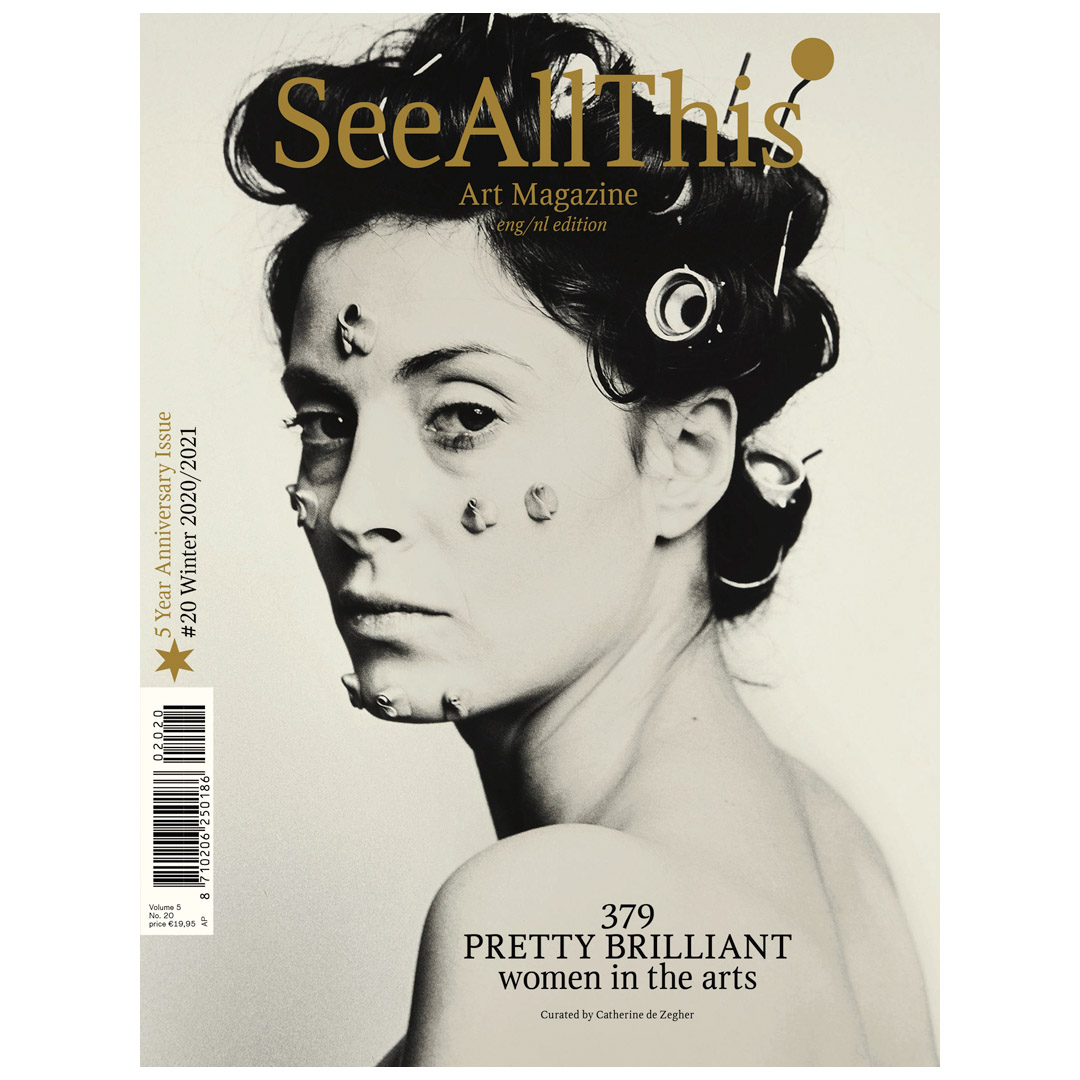
Hannah Wilke was a multidisciplinary artist, born to Hungarian Jewish parents in New York City on March 7th, 1940, growing up in the shadow of the holocaust. Through drawing, sculpture, performance, photography and video, Wilke explored themes of femininity and gender. She used her body as a medium to drive conversation on female agency, describing this dialogue between her body and process saying “I become my art, my art becomes me. My heart is hard to handle, my art is too”. Her practice emerged in the period of second wave feminism, a time in which the slogan ‘the personal is political’ was popularized. A fundamental theme that runs throughout her own work.
Wilke pushed the boundaries of the 1970s art-world, using materials that were soft, malleable and non-conventional such as lint, latex and chewing gum. In her series “Needed-Erase-Her” she folds kneaded erasers into small vulval forms, drawing on how women are both simultaneously ‘needed’ and ‘erased’ in society. She displayed the vulvas in a grid, on painted boards, describing them as “little pieces of nature, a new species, they exist the way sea shells exist”. They become common motifs throughout her work.
Later, Wilke would turn to her body as an expression of fragility when she was diagnosed with terminal lymphoma in 1987. Over the years leading up to her death in 1993, she documented the deterioration of her own body through photographic self-portraits, drawings and sculptures in her final series ‘Intra-Venus’. Ten years prior she had documented her mothers own battle with breast cancer in a photographic diptych titled ‘Portrait of the Artist with her Mother’ In this, both women lay bare-chested, one healthy, one marked with the scars of illness and this way of image making echoing the visual language of Intra-Venus.
By Hattie Alwen